

Integrated Development Tracks
Track Four: Cultural Heritage as a Component of Local Development
APLA approached cultural heritage as a living development resource and a practical tool for strengthening resilience and safeguarding identity and collective memory, particularly in villages and areas exposed to marginalisation and urban erosion. Interventions under this track were based on an integrated approach that distinguishes between field interventions at heritage sites on the one hand, and building the knowledge and institutional infrastructure for heritage protection on the other, ultimately ensuring sustainable impact and avoiding partial or ad hoc responses.
First: Projects for the Rehabilitation and Reintegration of Heritage Sites into Public Life
This component focused on implementing direct field interventions in heritage and natural sites of historical and social value to protect them from deterioration, reactivate them as utilised public spaces, and integrate them as living components of the social fabric and local economy. These projects were in response to the needs of targeted villages to protect their symbolic sites and link heritage to daily use, domestic tourism, and local identity.
Impact Indicators
Number of heritage sites rehabilitated or reactivated: 5 | Number of villages and towns benefiting from field heritage interventions: 5 |
Qualitative Results
- Reintegrated heritage sites into daily community use instead of remaining neglected or isolated.
- Strengthened the connection of local communities with their historical and natural surroundings.
- Transformed heritage into a supporting element for local development and domestic tourism.
List of Projects
Rehabilitation of Ein Salman Archaeological Site project – Beit Duqqu Village Council
| Rehabilitation of Al-Hafira Heritage Site project – Rummana Village Council
|
Restoration and Rehabilitation of Ein Al-Balad Site project – Husan Village Council
| Rehabilitation and Beautification of Ein ‘Anza Site project – ‘Anza Village Council
|
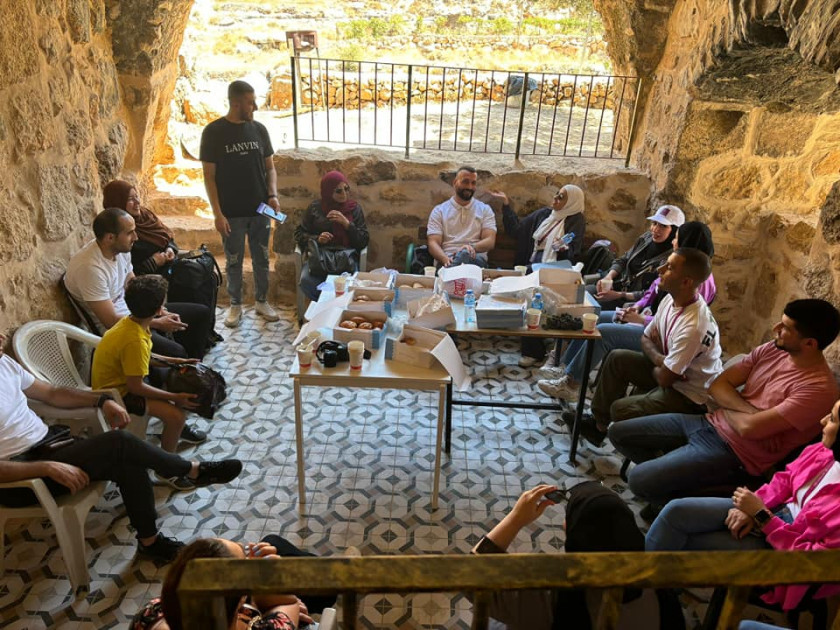
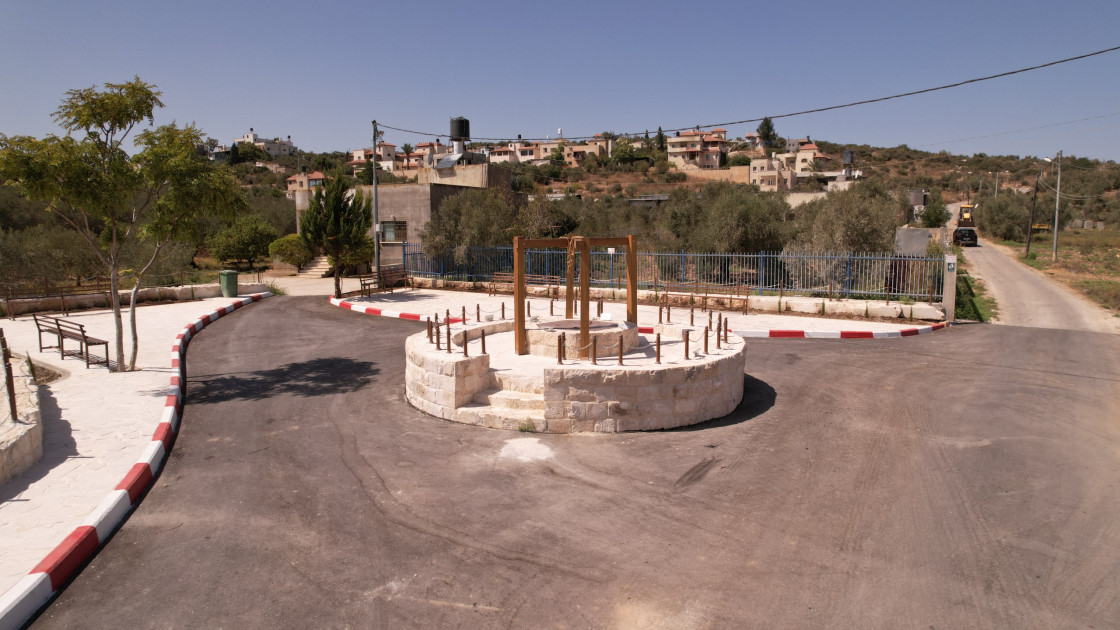
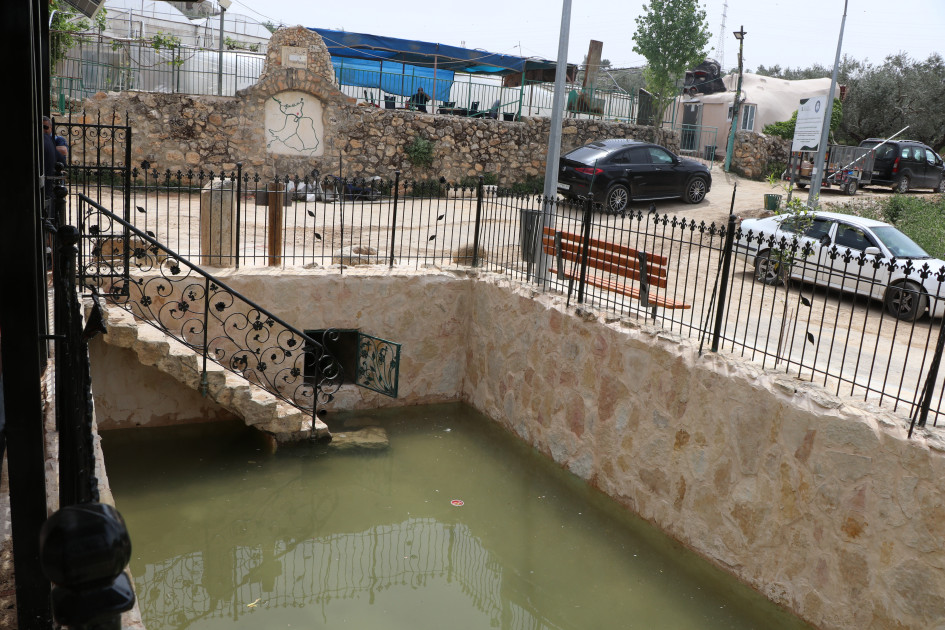
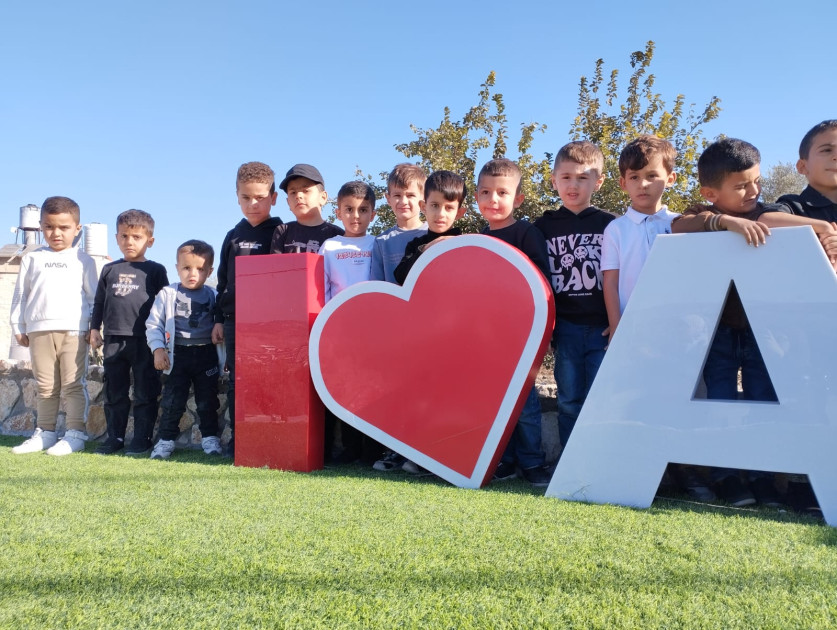
Second: Project for Documenting Architectural Heritage and Building a National Knowledge Base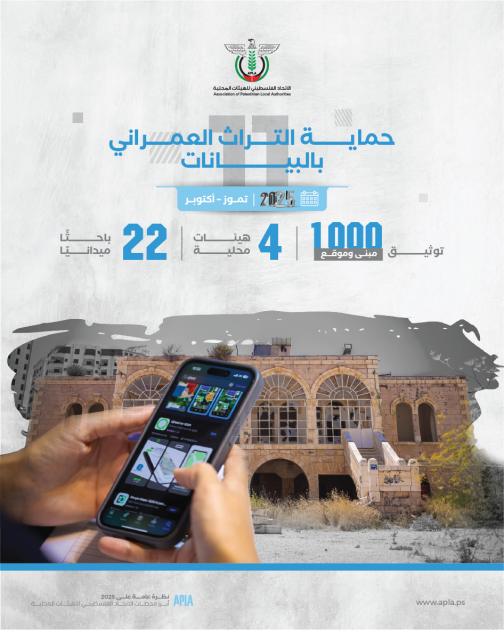
This activity complements field interventions through a long-term institutional approach aimed at protecting architectural heritage through systematic documentation and the establishment of a reference database. It enables LGUs and national entities to manage the heritage component within urban planning in alignment with national and international standards.
The documentation project responded to the need to shift from dealing with heritage as isolated cases to considering it as an institutional file based on data, providing a foundation for legal protection, future planning, and mobilising international funding.
Qualitative Results
- Established a reference database of historic buildings to be used in planning and protection.
- Enhanced LGU capacity to manage architectural heritage in line with professional methodologies.
- Strengthened integration between heritage conservation and sustainable urban development.
Impact Indicators
Number of LGUs: 4 (Hebron, Taffuh, Beit Kahil, and Halhul) | Field researchers: 22 | Number of historical buildings and sites documented: about 1,000 |
Track Five: Land Management and Data-Driven Planning
Within this track, APLA focused on strengthening land management tools and regional planning within LGUs. This was informed by the importance of possessing accurate data as a fundamental entry-point for protecting resources, regulating land use, and enhancing the negotiating capacity of village councils in constrained and complex contexts.
These interventions were implemented in response to an urgent need among LGUs in Area C for modern technical tools that contribute to improving the management of agricultural and zoned lands, and to supporting joint planning among neighbouring councils. This will eventually enhance territorial integration and reduce random processing of resources and areas. 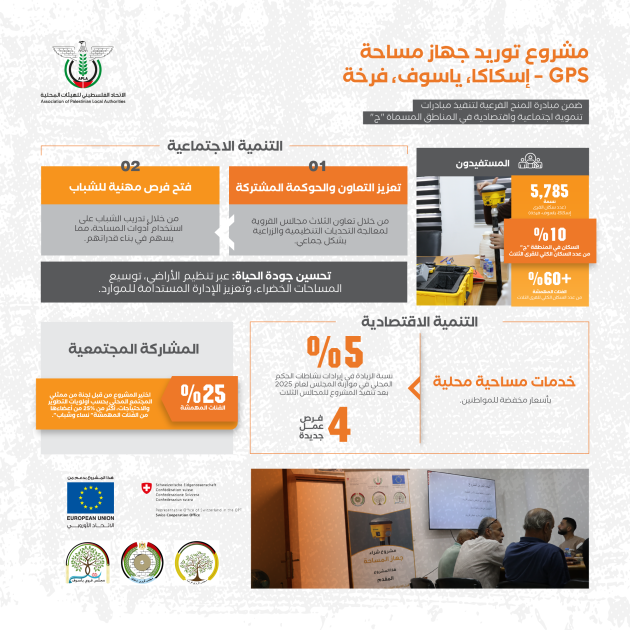
Impact Indicators
Number of LGUs supported with data-driven planning tools: 3
Qualitative Results
Strengthened LGU capacity for planning based on accurate information.
Supported regional cooperation among village councils in managing land and shared resources.
Improved LGU preparedness to address legal and regulatory challenges related to land.
List of Projects
Procurement of a Shared GPS Device project – Iskaka, Yasouf, and Farkha Village Councils
Track Six: Local Economy and Green Innovation
Through this track, APLA sought to support innovative local economic models grounded in principles of environmental sustainability. These contribute to creating added value for the local economy, particularly in areas that suffer from limited economic opportunities and restrictions on access to resources.
The interventions under this track were based on developing initiatives that support green entrepreneurship and link environmental innovation with local community needs. These are tailored to enhance employment opportunities, open new prospects for youth and women, and contribute to building a more resilient and sustainable local economy.
Impact Indicators
Number of initiatives supported or launched: 11 | Number of direct beneficiaries of innovation and entrepreneurship programmes: 15 |
Qualitative Results
- Enhanced local employment opportunities linked to the green economy.
- Supported the transition towards sustainable production models at the local level.
- Enabled local communities to derive economic benefit from environmental solutions.
List of Projects and Innovative Initiatives
Establishment of a Green Business Incubator project – Beit Liqya, Western Ramallah cluster.
Improving the Management of Organic Waste and Activating the Organic Composting Plant project – Beita, Southern Nablus cluster.
- Green entrepreneurial initiatives: Within this track, APLA supported nine community-based entrepreneurial initiatives led by youth and start-ups, focusing on innovative economic solutions emerging from local environmental challenges. These included initiatives for:
o Recycling textiles and transforming them into marketable local products.
o Recycling wood and producing wooden furniture using reused materials.
o Recycling plastic within a local circular economy model.
o Cultivating azolla to produce low-cost organic animal feed.
o Cultivating azolla and water harvesting as a multi-functional sustainable production model.
o Environmentally friendly mushroom cultivation as a sustainable food-based economic activity.
o Mushroom cultivation using recycled agricultural waste.
o “Green Screen” initiative as an environmental media platform supporting green economy.
o Developing local green products based on reuse and environmentally friendly production.
Local Economy as a Cross-Cutting Impact across Tracks: Small Projects Opening Doors to Income and Employment Opportunities
In addition to the service, environmental, and social dimensions of the implemented projects, the economic component emerged as one of the cross-cutting impacts of a number of APLA interventions. Certain field projects were designed in a manner that generates self-income for LGUs, or creates direct and indirect local employment opportunities, rather than allowing new facilities to become a long-term operational burden.
This approach stemmed from a practical recognition that the sustainability of a project is not achieved through construction alone, but through its ability to generate economic value, even if limited. This contributes to covering operational costs, supporting the revenues of village councils, or opening local employment spaces for the most affected groups, particularly women and youth.
This impact included projects incorporating income-generating operational components, such as small retail points, cafeterias, rentable spaces, or facilities that can be operated in partnership with the local community. It enhances the principle of “operational sustainability” within municipal work and redefines the development project as a productive tool rather than merely a service facility.
Impact Indicators
Number of employment opportunities: 481 | Number of projects that include an income-generating component: 24 |
Qualitative Results
- Introduced the principle of operational sustainability into project design rather than limiting interventions to construction.
- Increased the own-source revenues of village councils through operation, leasing, and local partnerships.
- Opened safe and low-cost workspaces for women and youth within the targeted villages, particularly in Area C.