Home
Home
 Governance and Performance
 Enabling LGUs
 Representing, Lobbying and Advocacy

Our Commitment to the 2030 Global Agenda for Sustainable Development

Key Highlights
- Upgraded and developed the SDGs Platform
- Compiled the Training Manual for SDG Localization
- Established SDGs Taskforce
APLA is firmly committed to implementing the 2030 Agenda by empowering LGUs as the actors closest to citizens and most capable of effecting real change at the community level. This approach is premised on APLA’s belief in the pivotal role of LGUs in realizing comprehensive development by integrating economic, social and environmental dimensions into the local government sector. Despite the complex political and financial challenges facing Palestine, APLA continues its efforts to ensure the integration of SDGs into local policies with a view to strengthening community resilience and consolidating the principle of development based on responding to the real needs of citizens.
Follow-up on the SDGs Localization Plan implementation at the level of LGUs
In 2024, APLA took the SDGs Localisation Plan to a more advanced level of practical implementation. To this end, it expanded interventions and deepened working relationships with LGUs within a clear institutional framework governed by measurable goals. Efforts focused on developing tools, activating channels of engagement, and providing capacity building to LGUs to ensure that SDGs are integrated with local priorities.
- Promote awareness of the 2030 Agenda through targeted digital campaigns and activate community interaction across various media platforms.
- Expand the user base of the SDGs platform(sdgs.ps) and invigorate its role as a reference tool to document LGU efforts and follow up on the progress made.
- Select and nominate Localization Ambassadors through the dedicated SDG Taskforce to represent and support local SDG localization efforts.
- Implement specialized training programmes to build LGU capacity in SDG planning, implementation, and monitoring.
- Develop an effective ME system that links local indicators to respective national counterparts, ensuring systematic documentation and ongoing analysis of progress towards implementing SDGs.
Develop and upgrade SDGs Platform (www.sdgs.ps)
Representing a paradigm shift in its technical architecture and knowledge content, the SDGs platform underwent full-scale development, reinforce its status as a strategic national tool in documenting LGU contributions to achieving the 2030 Agenda, enhancing transparency, facilitating access to knowledge, and supporting data-driven decision-making.
- In addition to upgrading technical infrastructure, available indicators and data were integrated into the platform so that it can receive and collect additional indicators.
- An integrated database of relevant indicators was built in coordination with the Palestinian Central Bureau of Statistics (PCBC) to enhance integration of the ME system in line a unified national methodology.
- While user experience was improved, interactive interfaces were developed to facilitate data entry by LGUs and enhance accessibility to relevant information.
- Interactive educational tools, including digital games for young people, were included to raise awareness of sustainable development concepts and encourage community participation of different age groups.
Submit the annual report to UCLG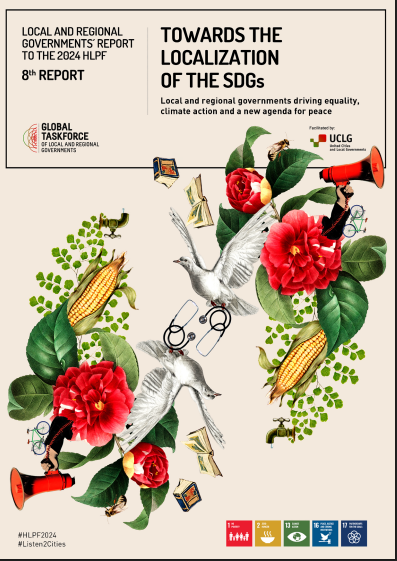
APLA is committed to developing and submitting a comprehensive annual report to UCLG. The report documents national efforts localize SDGs at the level of LGUs in Palestine. It sheds light on APLA-led interventions and initiatives in multiple areas, including sustainable urban planning, environmental management and community engagement, within an integrated vision to promote sustainable development locally.
It also addresses key challenges and opportunities associated with the Palestinian political and economic context and provides qualitative data and analysis on the progress made towards adopting and implementing local policies in line with the 2030 Agenda. Through this report, APLA highlights success stories and best practices with a view to strengthening the presence of the Palestinian experience at the international level and emphasising LGU role as a key pillar to realize sustainable development.
Training Manual for SDGs Localization
APLA developed a comprehensive training manual, serving as a practical and professional point of reference to support LGUs in the SDG localization process and enable the integration of SDGs into LGU development plans and programmes. Using a participatory approach, the manual was informed by national and international experiences, technical contributions from APLA, and training materials approved by the UCLG. The content was adapted to fit the Palestinian context.
The manual comprises 6 main chapters, each addressing a strategic theme, including:
- Introduction to SDGs
- Multi-level governance
- SDG integration into local development planning
- Decentralized cooperation
- Municipal funding
- Monitoring and reporting tools
The manual also features practical tools for assessment and planning, indicative steps for implementation and monitoring, case studies, real-life examples, and interactive exercises to enhance effective training and support application at the level of LGUs.
Establish the SDGs Taskforce
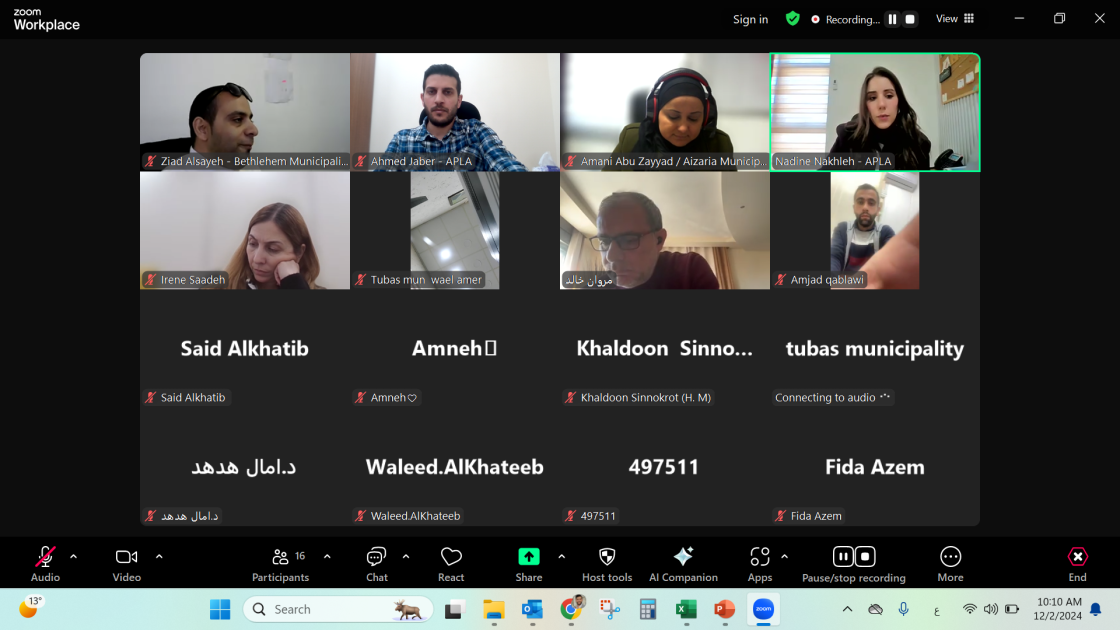
As part of its commitment to localizing the 2030 Agenda, APLA launched the SDG Taskforce as a specialized institutional platform for coordinating efforts and guiding sustainable development initiatives at the local level. The taskforce is a technical focal point that combines expertise, resources and know-how to effectively respond to development challenges, develop sustainable local projects, and promote experience sharing among LGUs by:
- Contributing to designing and implementing sustainable development initiatives in response to local community priorities, enhancing the impact of localization.
- Addressing challenges associated with the SDGs localization by providing practical solutions and proposals based on field experiences and expertise.
- Enabling LGUs to set relevant priority issues in a participatory and systematic manner, ensuring that local plans are aligned with the 2030 Agenda.
- Building technical and training capacity. In this vein, taskforce members took part in focused training programmes which qualified them to work as facilitators and trainers in multiple SDGs areas.
- Promoting experience and knowledge sharing between LGUs and providing easy access to necessary localization resources and tools.
Capacity building by training the SDGs Taskforce
As part of its efforts to activate the role and enhance technical readiness of the SDG Taskforce, APLA delivered a focused training programme to increase the taskforce efficiency to spearhead and implement the SDGs localization process at the local level.
Number of training sessions: 4 intensive sessions.
Trainer: Consultant Marwan Durzi.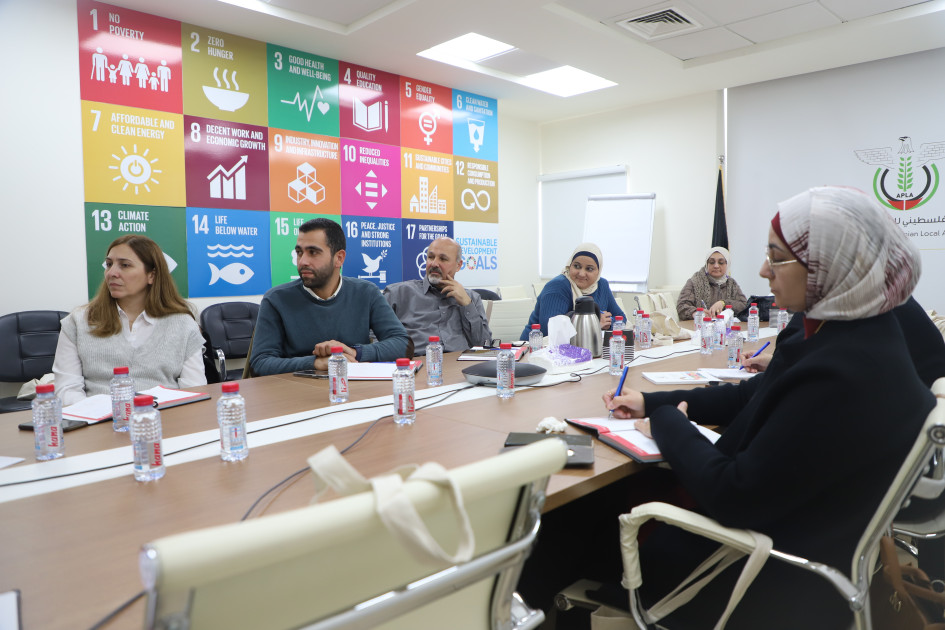
Number of participating LGUs: 13.
Number of participants: 18 (7 males, 11 females).
Training Themes:
- Systematic introduction of the concept and practical applications of SDGs localization.
- Review of multi-level governance models and coordination mechanisms among actors.
- Systematic and measurable SDGs integration into local planning.
- Activation decentralized cooperation tools and exchange of experiences between municipalities.
- Production of local voluntary reports (VLRs) in tandem with international standards.
- Review of sustainable municipal financing tools to support implementation of the 2030 Agenda.
Inclusion and Gender Taskforce
In the context of APLA’s commitment to promoting the principle of Leaving no one behind and efforts to integrate the concepts of inclusion and equality in the SDG localization, APLA continued to support the Inclusion and Gender Taskforce, which brings together 13 representatives from 13 LGUs. This taskforce provides an interactive space for experience sharing and joint work to develop more equitable and inclusive local policies.
Throught the SDG Taskforce, in 2024, APLA held 5 focused sessions on gender mainstreaming into LGU plans, humanitarian responses in times of crisis, and mechanisms to support the most vulnerable groups. These sessions saw wide participation of LGU representatives and experts, promoting practical understanding of and connecting inclusion issues to development and humanitarian responses at the local level.
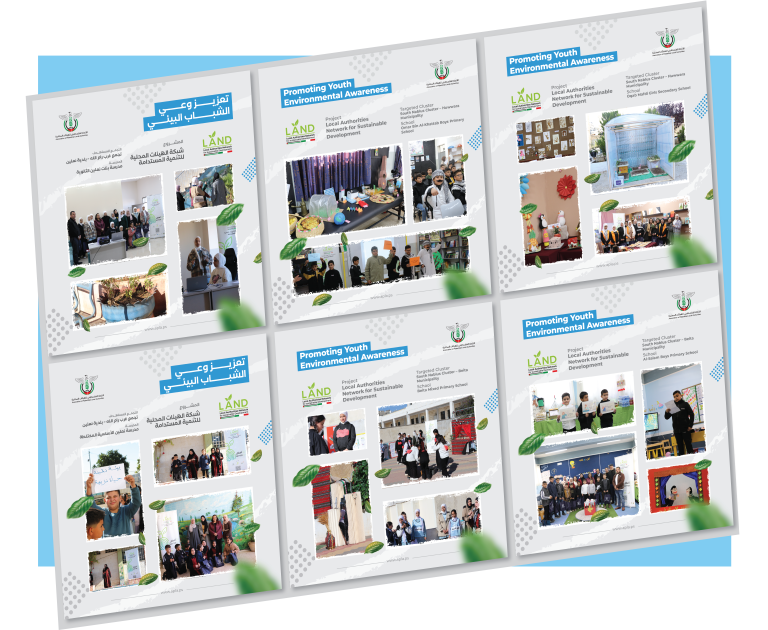
Promoting Environmental Awareness among the Youth Campaign
Project: LAND Project
Objective: Promote environmental awareness among Palestinian youth by involving them in environmental activities at schools and in communities.
- Environmental Clubs: 7 environmental clubs at seven schools in western Ramallah and southern Nablus communities.
- Engaged students: 126.
Activities:
- Planted more than 500 trees (fruit-bearing and ornamental) in school gardens.
- Implemented recycling activities.
- Organized six voluntary cleaning campaigns at targeted schools.
- Produced 4 awareness plays, highlighting the importance of environmental conservation and pollution control.
- Painted 5 murals in schools to increase environmental awareness among students.
- Engaged over 100 parents in environmental activities, with 4 LGUs collaborating in activity implementation.
- Converted 3 un-reclaimed areas into green spaces by planting fruit-bearing trees and aromatic plants.