
 Home
Home
 Governance and Performance
 Enabling LGUs
 Representing, Lobbying and Advocacy

Our Progress in International Cooperation

In 2024, for APLA, international cooperation was not just a development option, but a strategic tool to defend the Palestinian right to exist, dignity, and justice. In the shadow of ongoing aggression against land, people and institutions, APLA used municipal diplomacy as a platform for pressure, international partnerships as a means to expand solidarity, and representation in global networks as an arena to raise the voice of Palestinian LGUs in the face of exclusion and denial.
During the reporting period, APLA invested in building real, rather than formal, alliances premised on shared values and alignment with humanitarian principles. It sought to transform its presence in international forums into a tool of tangible impact and fair alternatives. In its efforts, APLA did not only represent Palestine, but it also extended Palestinian participation in international local governance structures. It invigorated Palestinian municipalities’ roles in global policy dialogues on peace, justice, and sustainability.
By this approach, APLA established itself as a representative and policy-making hub on the international stage, guided by a clear vision: International cooperation is not an end in itself, but a means to promote resilience, achieve justice, and establish Palestine’s presence as a key factor in the future of global local government.
UCLG
Membership on the UCLG – the largest global network representing local governments – is a key facet of APLA's international visibility, reflecting its leading role in representing Palestine on the international stage. Active membership on the UCLG-MEWA is part of APLA's efforts and effective action to broaden Palestinian engagement in international forums and defend Palestinian local government issues in multiple contexts.
Thanks to APLA’s efforts, the status of Palestinian LGUs has been promoted by ensuring wide and multi-level representation at the various UCLG-MEWA structures, conveying Palestine's voice and claiming the Palestinian LGU rights in global policies.
Representing Palestine on UCLG councils and committees:
- UCLG Executive Bureau: APLA, Hebron Municipality.
- UCLG World Council: APLA, Hebron Municipality, Asira ash-Shamaliya Municipality, Nablus Municipality, Salfit Municipality, and Taffuh Municipality.
- Alternate members: Zababida Municipality, Ramallah Municipality, Beit Jala Municipality, Qalqiliya Municipality, Bani Na’im, Beituniya Municipality, and Dura Municipality.
- APLA is a member of the UCLG Policy Council, Opportunities for All: Redefining Finance and Economies of Equality.
- APLA is a member of the UCLG Capacity and Institution Building (CIB) Working Group.
Representing Palestine on UCLG-MEWA
- Chairing the UCLG-MEWA: Hebron Mayor, Tayseer Abu Sneineh.
- APLA is President of the UCLG-MEWA Committee on City Diplomacy.
- APLA is a member of the UCLG Executive Bureau.
- APLA is co-president of the UCLG Environment Committee and the Gender Equality Committee.
- Number of Executive Bureau members:33, including 8 from Palestine.
- Number of members of the UCLG World Council: 99, including 17 Palestinian LGUs.
Most notable and achievements and activities in 2024:
|
|
Meeting of the UCLG Policy Council, Opportunities for All: Redefining Finance and Economies of Equality 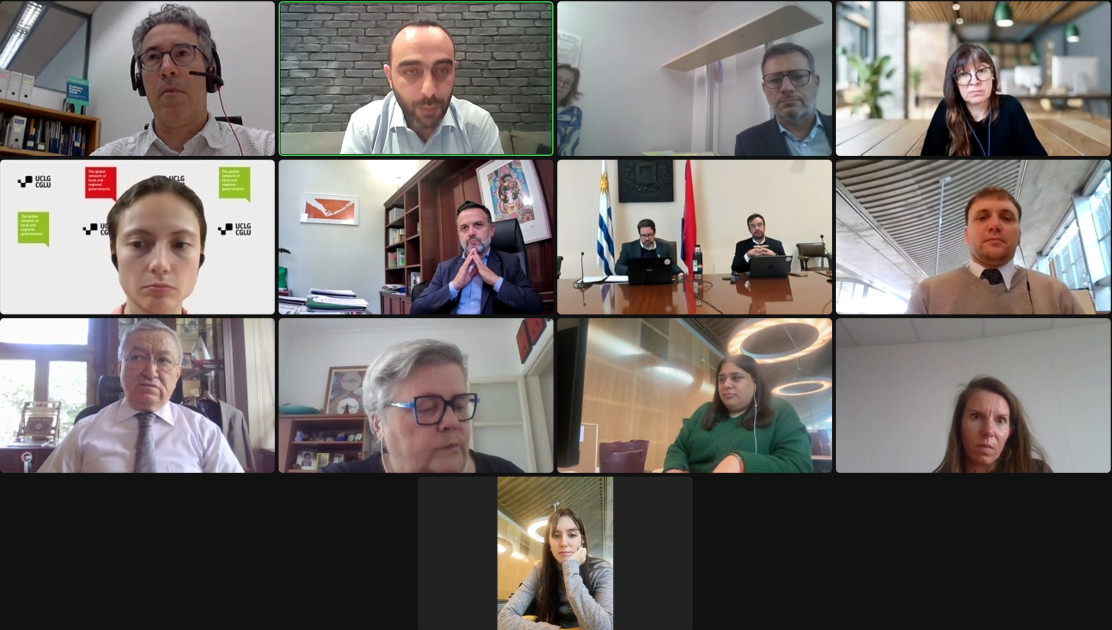
In the context of APLA’s participation in the meetings of the UCLG policy councils, APLA Executive Director, Eng. Abdallah Anati, made an intervention at the meeting of the UCLG Policy Council, Opportunities for All: Redefining Finance and Economies of Equality. He stressed that any talk of justice and equal opportunities is meaningless unless it includes the Palestinian people, who have been deprived of their most basic rights for decades under occupation.
Anati called for redefining the concept of "Opportunities for All" to embrace the Palestinian reality, emphasizing that the exclusion of Palestinians from the global frameworks of justice and dignity runs counter to the principle of equity. He highlighted the need to join forces to support the Palestinian rights to freedom, dignity and self-determination as an integral part of any just vision of comprehensive development and equal opportunities.
APLA participation in the UCLG World Council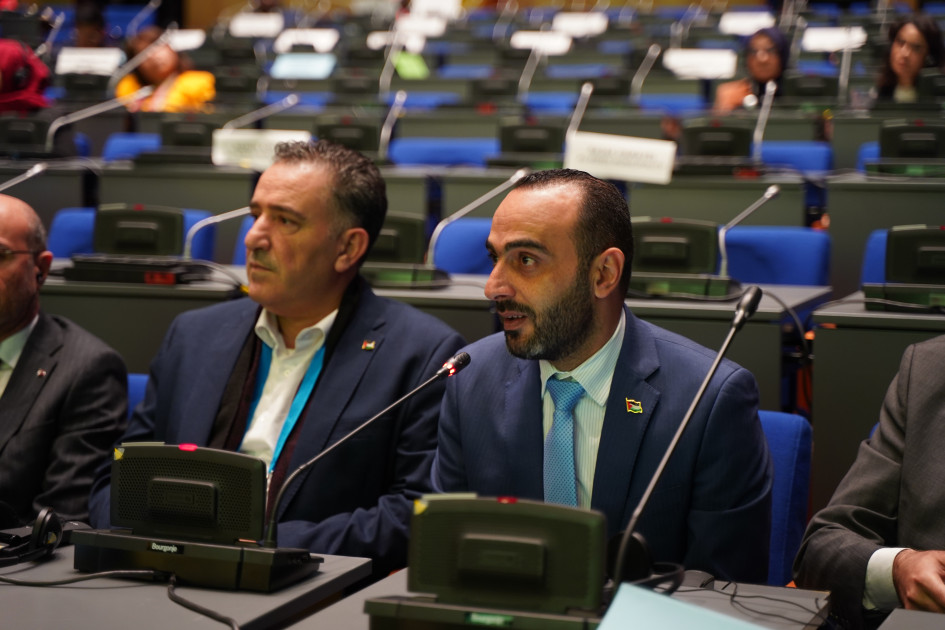
Contributing to the UCLG World Council meeting, APLA Executive Director, Abdallah Anati, called LGU representatives and associations from 50 countries to recognize the State of Palestine and its people, who have been living under occupation for decades, and human rights to survive and live-in freedom and dignity on their own land. Anati stressed that “Palestine is not just a political issue, but a humanitarian cause that has to do with peoples’ right to self-determination. Recognition and support of Palestine is a legitimate Palestinian right and a critical step to achieve justice for all and not to leave the Palestinians behind.”
APLA chaired the UCLG-MEWA Committee on City Diplomacy meeting
APLA President chaired the Presidency Meeting of the UCLG-MEWA Committee on City Diplomacy and Local Governance, held on the sidelines of the UCLG-MEWA Executive Bureau and Council joint meeting. Deliberating mechanisms for cooperation between cities in times of crisis, APLA stressed the importance of strengthening partnerships and sharing experiences to support resilience and enhance response of Palestinian cities in light of mounting challenges.
APLA participation in the CIB Working Group meeting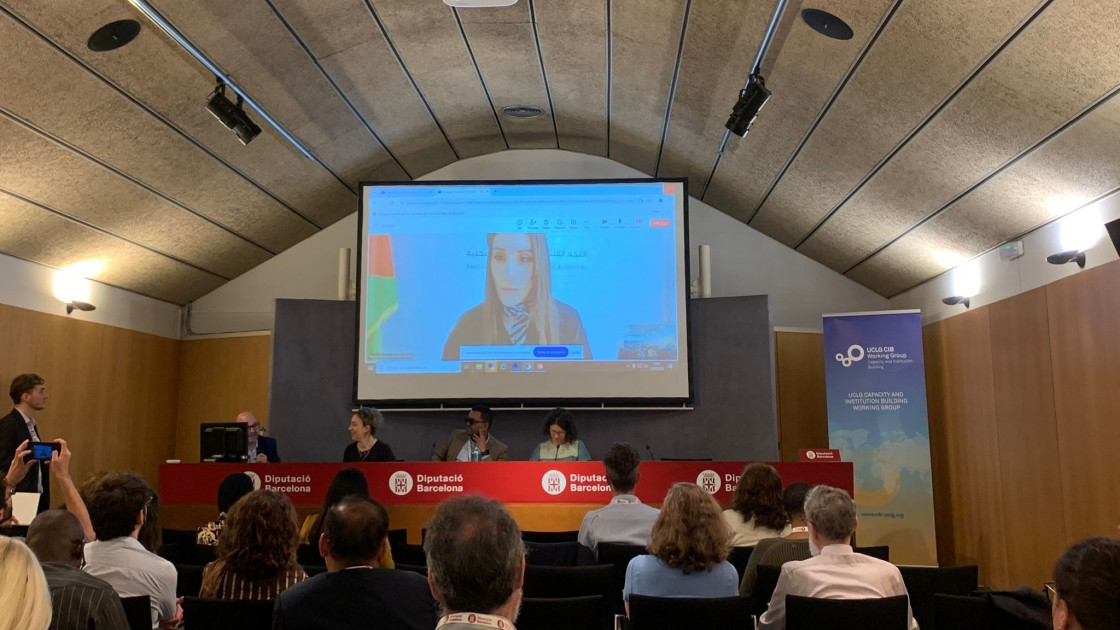
As part of its membership on the UCLG CIB Working Group, APLA took part in the annual meeting. In its intervention, APLA cast light on the disastrous effects of Israel's aggression against Palestinian municipal operations, including destruction of infrastructure, targeting LGUs and staff, and environmental and economic consequences. APLA stressed the importance of developing partnerships based on solidarity and practical support with a view to strengthening municipal capacity to maintain service provision in times of crisis.
Strengthening bilateral partnerships and expanding international alliances
In 2024, APLA took concrete steps to expand its international partnership network by launching new strategic dialogues and formalizing its relations with several regional and international municipal associations through official Memorandums of Understanding. These efforts reflect APLA’s commitment to building development-oriented and long-term strategic partnerships
Union of Municipalities of Turkey (TBB)
APLA and (TBB) finalized the final version of a MoU to be officially signed in early 2025. The MoU paves the way for a strategic partnership focused on cooperation in local development, knowledge and experience sharing, and capacity building. It also provides for joint initiatives in support of improved governance, more efficient public services, and boosted readiness of Palestinian municipalities to respond in crisis-affected environments.
Association of Flemish Cities and Municipalities (VVSG)
Bilateral meetings with the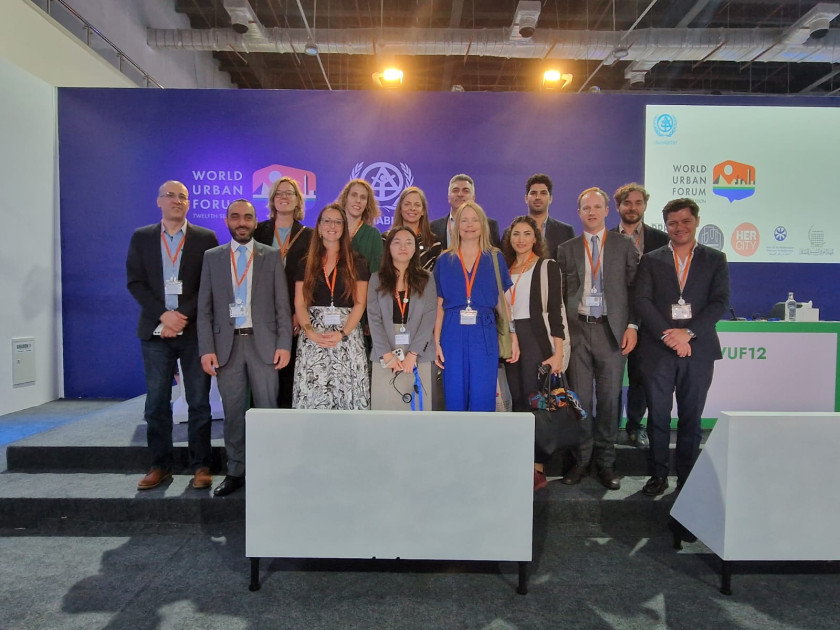 Association of Flemish Cities and Municipalities (VVSG) resulted in a preliminary agreement to sign an official MoU that would frame institutional cooperation between both parties. The partnership covers SDGs localization, exchange of experiences in good governance, capacity building, and development of local planning tools responsive to the Palestinian current context.
In addition to discussing the mechanisms for active twinning between Palestinian and Belgian municipalities, meetings explored building on the supportive political position in Belgium towards the Palestinian cause.
International City/County Management Association (ICMA)
Based on APLA’s strategic partnership with the International City/County Management Association (ICMA) between 2019 and 2023, both parties are in the process of renewing the institutional cooperation agreement for signing in early 2025. This will renew and expand the professional and operational framework of partnership.
The forthcoming memo addresses critical themes, including strengthening local leadership, supporting gender balance in decision-making positions, developing training and career guidance programmes, and exploring external funding opportunities in support of Palestinian LGUs. The renewal reflects APLA’s commitment to building effective partnerships that contribute to advancing local government on a professional and sustainable basis.
Diplomatic meetings to promote international partnerships
Meeting with TBB, Istanbul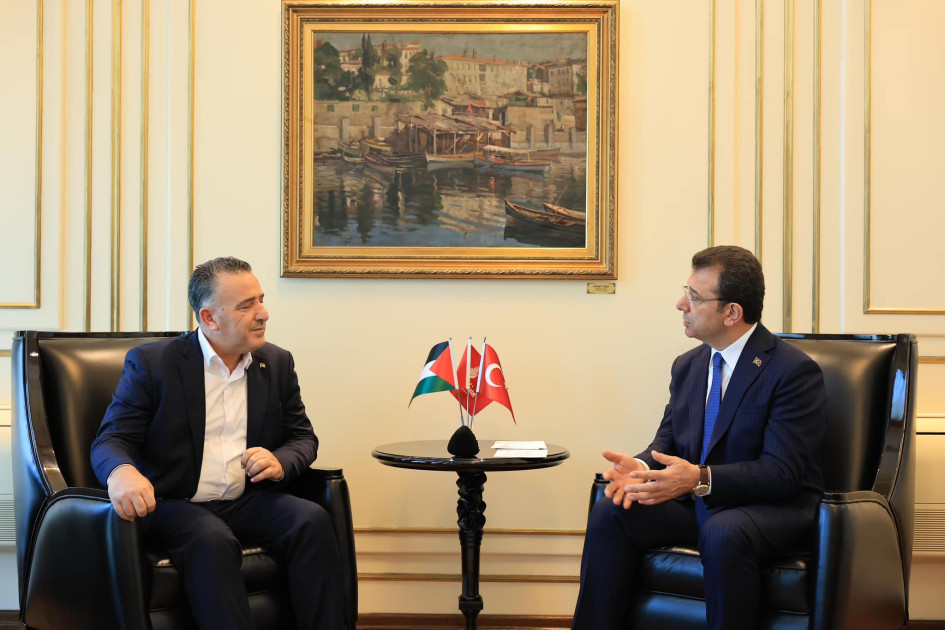
APLA President met with his counterpart, TBB President, Mr. Ekrem İmamoğlu, and discussed prospects of cooperation and experience sharing between Palestinian and Turkish municipalities. The meeting highlighted challenges posed by Israel’s policies on the Palestinian local government sector.
Meeting with the Turkish Cooperation and Coordination Agency (TİKA), Ankara
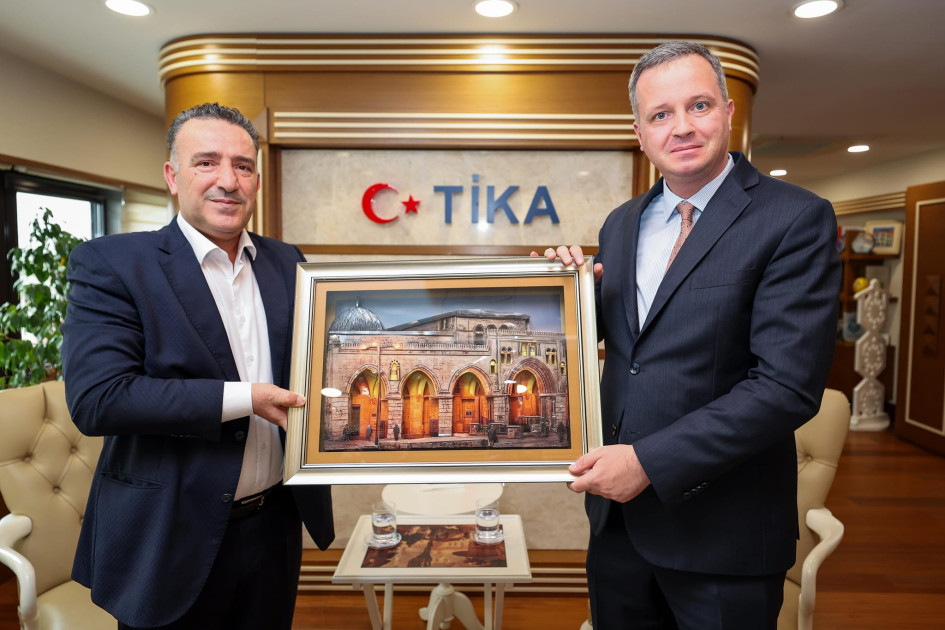
In a meeting with Serkan Kayalar, President of the Turkish Cooperation and Coordination Agency (TİKA), Az-Zubeidi discussed ways to support Palestinian communities by implementing development projects, stressing the importance of directing cooperation to serve public resilience in the current circumstances.
Meeting with the Consul General of Italy in Jerusalem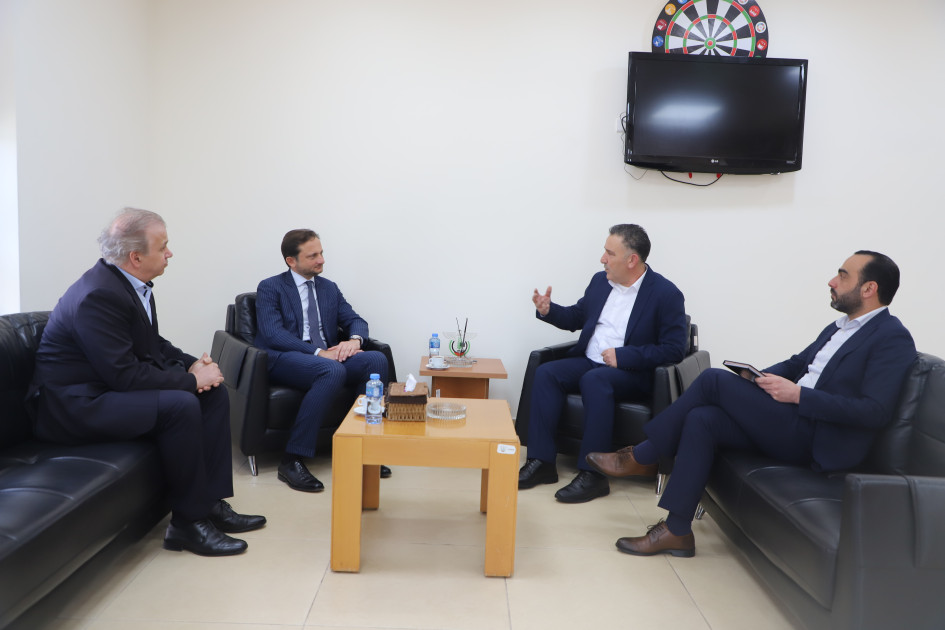
In a meeting with the Consul General of Italy, Domenico Pilato, As-Zubeidi presented a review of the consequences of Israel's aggression against LGU performance. Beside enhancing cooperation with Italian municipalities, both discussed prospects for expanding partnerships within the LAND project.
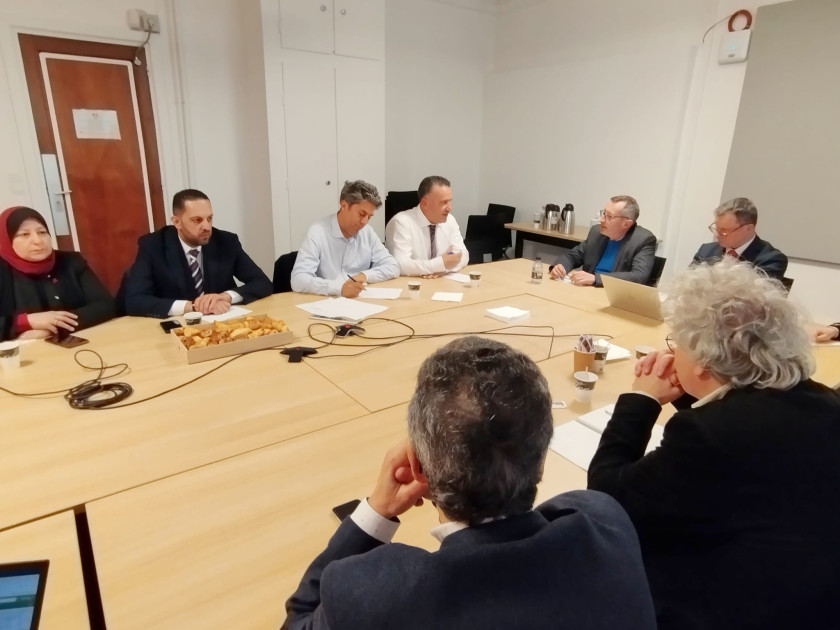
Official visit to Paris, France
APLA President held a series of meetings with officials from the French Senate, Ministry of Foreign Affairs, Sites & Cités remarquables de France, and Embassy of Palestine in France. During the meeting, Az-Zubeidi stressed the need for international pressure to stop the aggression against Palestinians and called for providing emergency financial support to LGUs. He further commended the prominent French role in supporting Palestinian rights as well as the history of partnership with APLA.
International participations
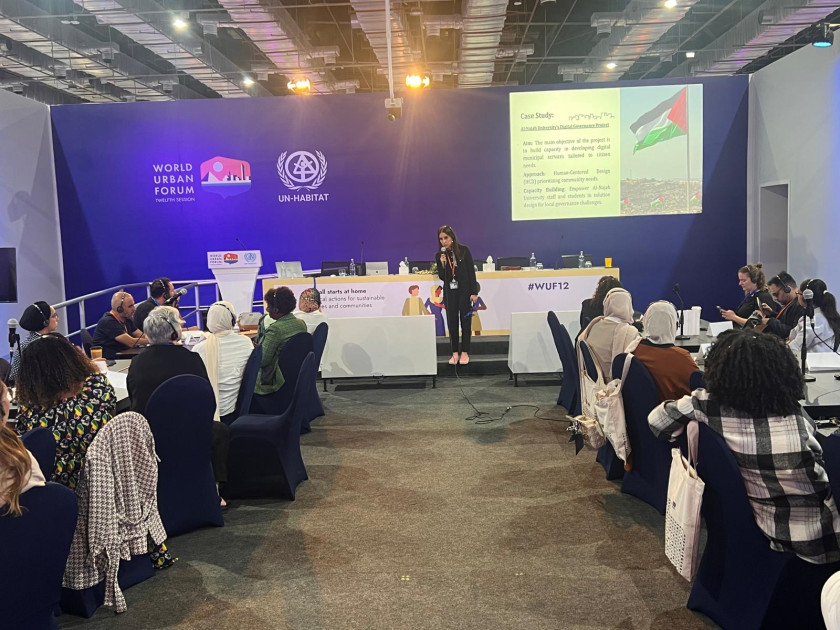
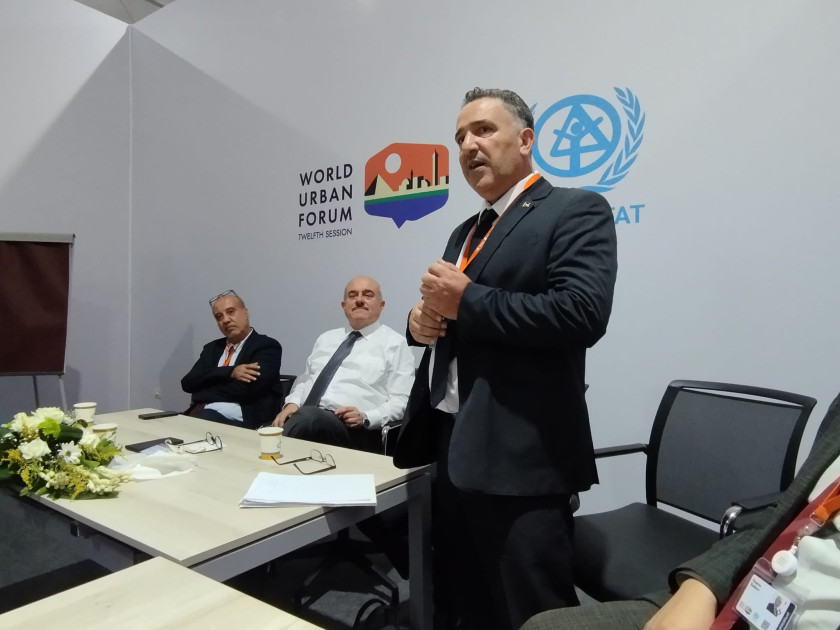
World Urban Forum (WUF12), Cairo
Participants:
- Abdul Karim az-Zubeidi, APLA President
- Abdallah Anati, APLA Executive Director
- Nadine Nakhleh, Communication and Advocacy Officer
Main contributions and results:
- APLA President took part in an official session, in which he called for international support to highlight suffering of Palestinian cities under occupation.
- APLA Executive Director made a presentation at a session on SDG Localization through Partnerships.
- APLA Communication and Advocacy Officer led a training workshop on Human-centred Design in Inclusive Urban Planning.
- APLA participated in the UCLG trainings on Change Planning Using SDG-related Tools.
- Bilateral meetings were held with international partners, including VVSG, Clima-Med, UCLG Learning and Gap Fund. These addressed opportunities for technical cooperation, partnership building, and experience sharing.
- In addition to integrating Clima-Med programmes into APLA work on climate adaptation, APLA discussed activating cooperation with the Gap Fund to support Palestinian municipalities.
Arab MAYORS’ Academy
Participant: Abdul Karim az-Zubeidi, APLA President
Main contributions and results: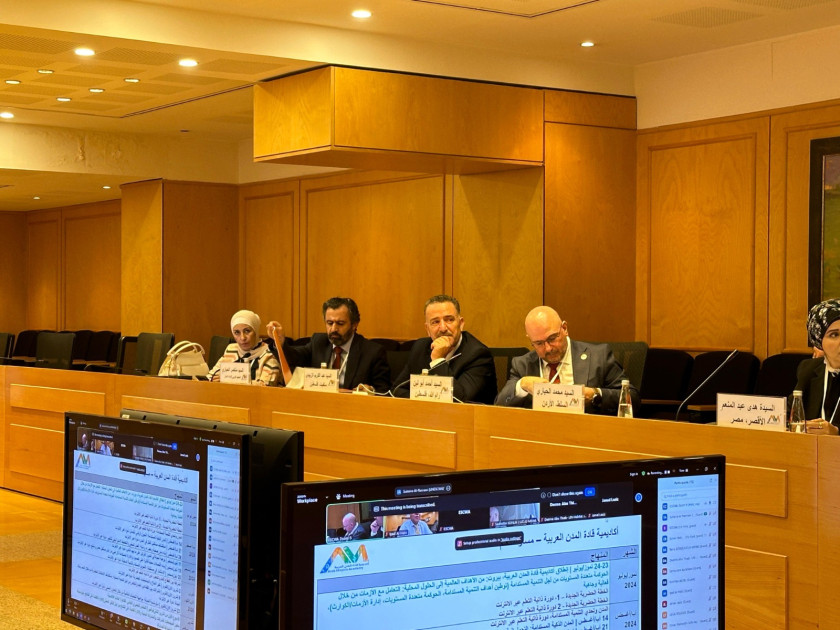
- APLA President took part in the First Edition of the Arab Mayors Academy. Tailored to the priorities of local leaders, the event brought together 13 mayors and governors from various Arab countries.
- Held in partnership with the United Nations Office for Disaster Risk Reduction, the workshop focused on pressing issues, including urban development, risk reduction, and climate challenges.
- In his intervention, Az-Zubeidi highlighted the importance of experience sharing to support Palestinian cities under occupation and siege. He pointed out the need to engage Palestinian LGUs in such programme capacity enhancement with a view to benefiting from regional experiences.
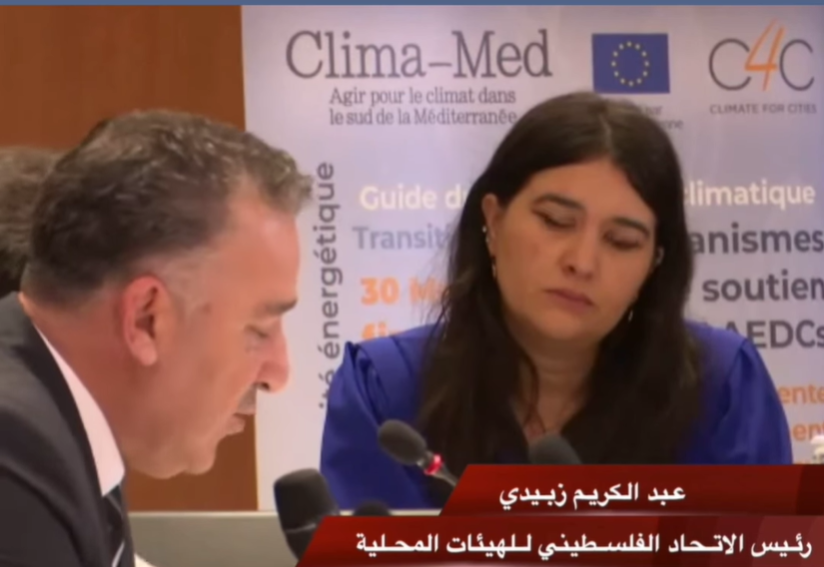
Clima-Med Steering Committee Meeting
 Participant: Abdul Karim az-Zubeidi, APLA President
Main contributions and results:
- APLA Joining Clima-Med National Coordination Team and the Covenant of Mayors for the Mediterranean (CoM Med).
- Introducing a plan to enable more than 160 Palestinian LGUs to engage in regional and international climate programmes.
- Presenting challenges to climate action in Palestine, particularly in the Gaza Strip, now experiencing severe environmental collapse. Due to settlement activity, the West Bank also faces heightened environmental threats.
German-Middle East Municipal Partnerships meeting
Speaker: Nadine Nakhleh, APLA Communication and Advocacy Officer
Main contributions and outputs:
- Reviewed the impact of Israel’s war on international partnerships.
- Called for redefining the goals of partnerships to build on the foundations of genuine solidarity and humanitarian support.
- Proposed a set of priorities, including international pressure to put an end to the aggression, provide humanitarian relief, support international advocacy, engage in boycott efforts, and confront media misinformation.
Palestinian-German Municipal Partnerships meeting
Speaker: Nadine Nakhleh, APLA Communication and Advocacy Officer
Main contributions and outputs:
- Highlighted the scale of destruction of municipal infrastructure in Gaza and threats to LGU staff.
- Presented environmental and health challenges posed by the targeting of vital infrastructure.
- Highlighted impact of the war on local revenues and basic service delivery.
- Called for international partnerships based on solidarity, dignity and justice, moving beyond formality.
Meeting of the Special Committee on Humanitarian Initiatives in Support of Gaza Citizens, Standing Committee for the Euro-Mediterranean Partnership of Local and Regional Authorities (COPPEM)
Participants: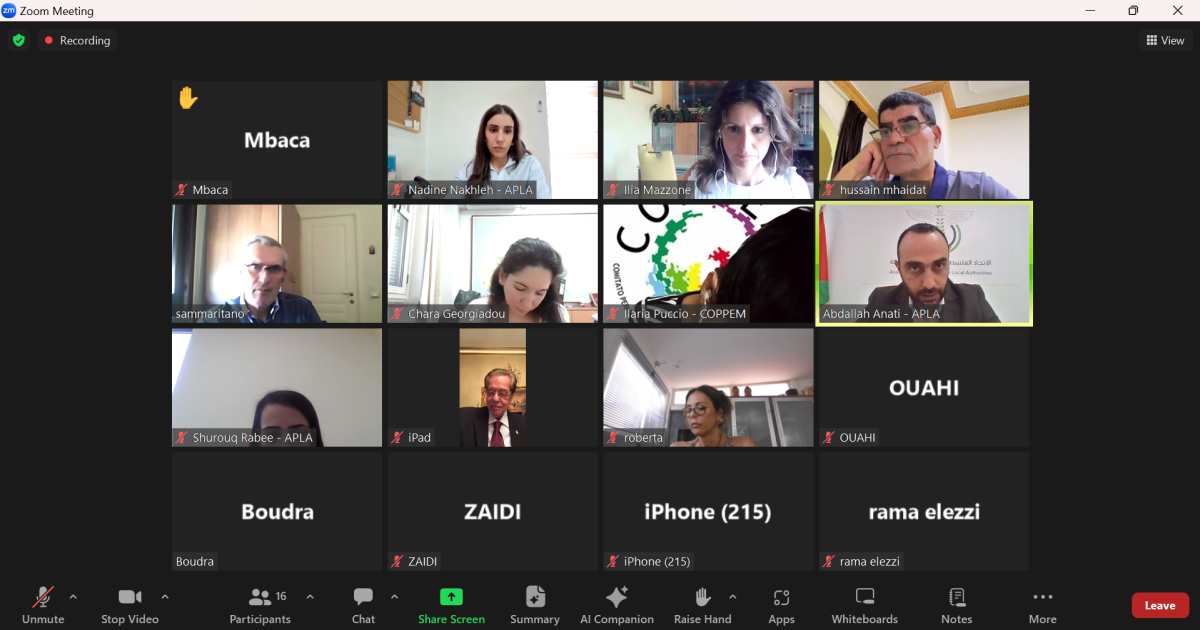
- Abdallah Anati, APLA Executive Director
- Nadine Nakhleh, APLA Communication and Advocacy Officer
Main contributions and outputs:
- Provided practical proposals to support local structures, including provision of fire trucks, water generators, mobile health facilities, medical personnel, emergency equipment, and employment initiatives.
- Presented a vision for long-term reconstruction plans with engineering and technical support and experience sharing.
- Called for urgent solutions to sanitation and solid waste crises.
- Highlighted Gaza municipalities’ efforts to start comprehensive urban planning from scratch and the need for technical support from international partners.
- The committee approved a recommendation to developed of a collective intervention plan, including advocacy campaigns, financial and in-kind support, and expanded partnerships on the short and long runs.


