
 Home
Home
 Governance and Performance
 Enabling LGUs
 Representing, Lobbying and Advocacy

From Local to National: Lobbying and Advocacy Strategies

Defending LGUs and strengthening their position and powers is a key driver for incorporating APLA, which was launched as an umbrella national institution to represent all Palestinian LGUs, spearheading the responsibility for unifying positions, representing interests and defending rights of LGUs. APLA is not only a coordinating platform, but a representative body that plays strategic roles in influencing public policies, promoting transparency and accountability, and facilitating exchange of knowledge and best practices. APLA also plays a vital intermediary role between the central government and LGUs, ensuring decentralization and placing citizens’ needs at the heart of policies and decisions.
APLA follows a clear vision, namely, local governance is the real entry point to sustainable development, and decentralization is not a technical requirement but a national need. Along this vein, APLA scaled up lobbying and advocacy efforts and led informed strategic interventions. These included the development of comprehensive policy documents, holding of national dialogues, active participation in relevant ministerial and technical committees, and submission of concrete recommendations to address financial and legislative crises facing LGUs, such as net lending, budgets, collection and regulation and administration laws.
Last year, advocacy was of a holistic and institutionalized nature. Not only did it involve rhetoric and claims, but it derived from an accurate database, realistic diagnosis of challenges, and direct interaction with decision makers, boosting APLA’s position as a trusted partner in public policy-making.
This intensive policy and institutional presence of APLA was not merely in response to emergency crises, but a normal extension of its role in creating an enabling environment for local government, on grounds of expanded powers, strengthened financial and administrative independence, and a fair legislative system. APLA has made sure that the voice of LGUs is heard and considered in all approved policies and regulations.
Key Highlights
|
|
|
|
|
Participation in relevant national committees
|
|
APLA and the government discuss strategic solutions to rnsure service continuty
In response to APLA’s recurrent appeals and warnings of risks to the continuity of services due to financial and regulatory challenges that face LGUs, a strategic workshop was held jointly by the government and APLA. The session brought together ministers, LGU Mayors, and representatives of the Ministry of Local Government (MoLG), MoI, M inistry of Planning and International Cooperation, MoTA and MoF, members of APLA Executive Committee, and ministry and APLA staff. To enhance public service delivery, participants discussed challenges to LGUs, proposed appropriate solutions, developed a common vision for the future of local government, and set mechanisms for further decentralization and increasing LGU powers.
APLA submitted a detailed document that includes its demands, recommendations, and proposals, addressing the following key areas in depth: maintaining the quality of services provided by local authorities, resolving the financial relationship between the government and local authorities, organizing the relationship between local authorities and line ministries, and addressing issues of net lending and debt settlement.
Main themes and challenges to LGUs
- Finance
APLA called for the immediate transfer of LGUs’ financial dues, the development of a transparent financial transfer system, and the allocation of a percentage of revenue from fees and taxes, such as fuel taxes and telecommunications license revenues, to LGUs. APLA also stressed the importance of upgrading LGU fee and tax collection system and transferring collection powers to LGUs.
Regulatory and legislative framework
APLA reviewed challenges posed by outdated LGU laws. It proposed that laws, such as the 1997 Local Government Unit Election Law and 2014 Public Procurement Law, be revisited to fit LGU functions. APLA demanded that new regulations be passed to promote LGU powers and cover new areas, including investment and sustainable development.
Working relationship with government bodies
The institutional relationship between LGUs and ministries was discussed, emphasizing the need for clear boundaries of authority and avoiding overlaps in responsibilities. Participants recommended enhancing coordination with relevant ministries during the drafting of legislation and policies.
Emergency and crises
In view of the LGU role in emergency and crisis management, APLA demanded that financial and technical resources be provided to support LGUs and strengthen partnerships between LGUs and relevant government entities.
Environment and public health
Highlighting environmental challenges associated with sanitation and solid waste, APLA called for developing an integrated, multi-party national plan to devise radical solutions for these problems.
Recommendations and decisions
- MoF commitment to monthly transfers: Within available financial resources, the agreed monthly amount of ILS 15 million will be transferred, prioritizing an incremental increase of this commitment in line with growing government revenues.
- Professional tax: Professional tax revenues will be earmarked to LGUs. A clear mechanism will be in place to transfer these revenues.
- Public procurement procedures for self-funded projects: A decision was made to give LGUs greater flexibility in public procurements for self-funded projects. Current procedures will be revised to facilitate implementation.
- APLA coordination with the Net Lending Unit: It was decided that APLA coordinate and cooperate with the Net Lending Unit to facilitate debt settlement and clearance procedures.
- Developing a system on government transfers: A new system on government transfers to LGUs will be developed, with funding from the Municipal Development and Lending Fund (MDLF) and in cooperation with the MoLG and APLA. The system will be submitted to the Council of Ministers for approval.
- Reviewing regulations and instructions: The MoLG will start reviewing and amending regulations and instructions on the working relationship with LGUs, including:
- Regulation on LGU classification,
- Regulation on LGU staff,
- Procedures for the Minister’s approval of LGU decisions,
- Issuing clear instructions on the dissolution and conditions of elected LGUs
- Revoking any circulars or procedures that contradict the law or violate LGU mandate.
- Collecting building and land (property) tax: While relevant decisions are reviewed, the transfer of property tax collection powers to LGU is scheduled to continue. Under effective laws, the statutory tax rate remitted to the government will not exceed 10%. Accordingly, the current 16% rate is illegal and unacceptable. To ensure justice and transparency, the transfer of valuation powers to LGUs will also be considered.
- Promoting cooperation with the Police: A decision was made to enhance cooperation between LGUs and the Police to expedite implementation of legal procedures and removal of encroachments on public rights.
Finance: Solutions to financial challenges
- Transferring Accumulated Financial Dues: Immediate and regular transfer of overdue financial dues to LGUs, alongside the development of a transparent system for financial transfers.
- Promote financial resources: Allocate a portion of the public budget and local taxes, such as fuel tax and telecommunications company fees, to LGUs and provide additional resources to support village councils.
- Reform municipal tax management: Transfer building and land tax and professional licence fees collection powers to LGUs, and create an electronic system for managing the flow of financial information.
- Net Lending and Reconciliation: Includes establishing mechanisms for accounting and reconciling all dues and debts, as well as unifying data.
Regulatory and legislative frameworks: Upgrade laws and regulations
- Upgrade the Local Government Unit Election No. 1 of 1997 to enhance LGU mandate and realistic classifications, and to address emerging issues, such as investment, heritage, and sustainable development.
- Upgrade and issuing new regulations, including updating the LGUs electoral system, buildings and zoning regulations, billboard standards, and wholesale market systems, in addition to enacting legislation that enhances the role of local authorities in service delivery.
- Strengthen partnership with the private sector by creating an enabling legislative environment and incentivising LGUs to adopt joint projects.
Strengthening the Relationship Between LGUs and Line Ministries
- Ensure LGU rights: In the context of law- and policy-making, coordination will be in place with line ministries to ensure that LGU mandate is not overstepped.
- Integrate with relevant ministries: Regulations will be amended to ensure integrated functions with ministries, such as the Ministry of Tourism and Antiquities (MoTA) and Ministry of Interior (MoI). In addition to improving law enforcement, encroachments will be addressed.
- Create mechanism of joint action: Joint organizing committees will be established to devise joint sustainable solutions for emergency crises.
Lobbying and Advocacy for Law Amendments - Delegating building and land (property) tax collection power to LGUs: Now totalling 39, 24 LGUs were authorized to collect property tax. Work is underway to extend authorization to further LGUs to promote financial independence and increase local revenues.
- Manual for job descriptions at LGUs: This new manual was adopted following APLA’s active role in consultations. Tailored to enhance institutional performance and employment standardization, the manual contributes to developing capacities and promoting efficiency of LGUs.
- Strategic plan of the Palestinian Anti-Corruption Commission (PACC): APLA participated in consultations on PACC strategic planning and made constructive contributions to ensure consistency with LGU needs and promote transparent and accountable LGU functions.
- Instructions of the Palestine Monetary Authority (PMA) Governor on cash deposits: Thanks to APLA efforts and mobilizing support of the Minister of Local Government, cash deposits from LGUs were accepted following recurrent applications. This achievement contributed to reducing financial challenges to LGUs.
- Regulation on billboards and advertising signs in LGU areas: To maintain LGU rights and promote financial revenues, MoLG recommendation to exempt advertising companies from a portion of billboard and advertising sign fees was turned down.
- Regulation on health hazards in LGUs: APLA refused the MoLG recommendation to extend the period of waste fee discounts for hotels to maintain equitable financial distribution and ensure LGU rights.
- Budget approval conditioned on debt scheduling: APLA requested that the Minister of Local Government facilitate requirements for budget approval conditioned on debt scheduling to enhance financial and administrative work progress.
- LGU courts started functions, supporting and enabling LGUs to rapidly carry out legally prescribed powers and duties. In these courts, any violations are examined by a judge specializing in LGU cases.
- A research paper on LGU revenues and expenditures: APLA produced a comprehensive diagnostic and analytical research paper on LGU revenues and expenditures to provide a clear vision of their financial position and promote good governance.
Develop an analytical study to promote financial sustainability and good governance
In line with its commitment to promoting LGU financial sustainability and good governance, APLA, in collaboration with the Palestine Economic Policy Research Institute (MAS), developed an analytical study on Revenues and Expenditures of Palestinian Local Government Units, in the context of the UNDP-funded TEA3 Programme.
This study provides a diagnosis of LGUs’ financial position, identifies legislative and administrative gaps that obstruct financial efficiency, and proposes innovative solutions to enhance financial stability and develop financial management systems in line with international standards. To consolidate LGU resources management powers, the study stresses the need to upgrade the legal framework that regulates LGU functions, particularly the Law on Local Government Unit Election No. 1 of 1997.
Findings were presented in a workshop held by Mas with the participation of experts, academics and donor partners. APLA Executive Director highlighted the importance of the study in embedding sustainable financial management. In implementation of APLA’s strategic objectives 2023-2027, consolidated laws and policies need to be made to improve LGUs’ financial and administrative performance.
Launching the MAYOR’S Forum
Vision: Establishing a strategic platform for consultations, exchanging experiences and ideas, and shaping innovative visions aimed at enhancing the role and efficiency of the local governance sector.
The forum's activities began with a series of dialogue sessions:
- Title: "Assessing the Current Situation and Developing a Future Vision f
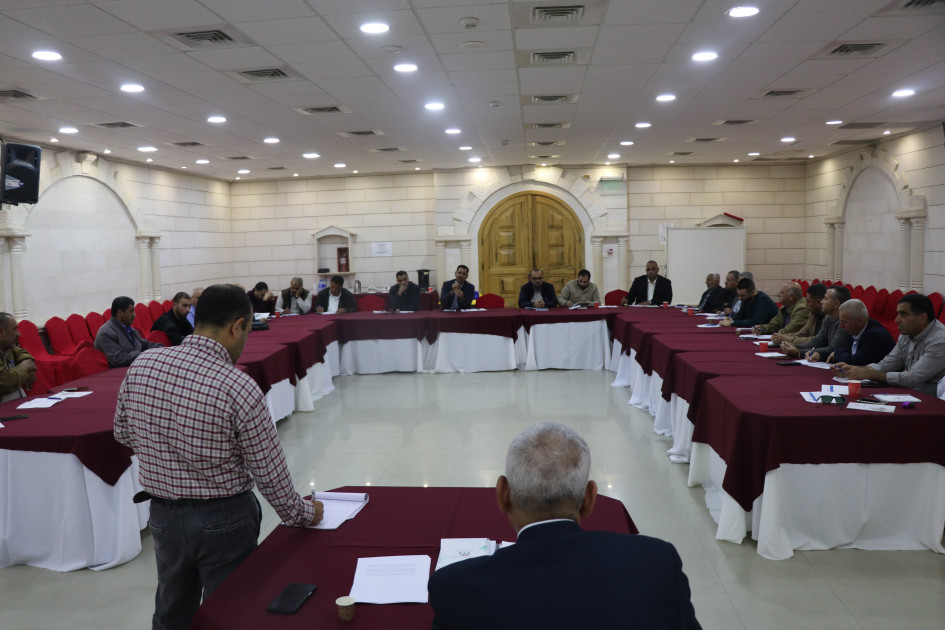 or the Local Governance Sector in Palestine."
 - Locations: Five major cities (Jenin, Tulkarm, Nablus, Ramallah, Hebron).
- Participants: 142 representatives from 108 LGUs across various governorates of the West Bank, including 80 Mayors.
The discussions focused on three main themes:
- Financial Situation of Local Authorities.
- Regulatory and Legislative Framework.
- Basic Services.
APLA’s Advocacy Strategy
Vision: Strengthening APLA’s role as a representative and advocacy body that combines the characteristics of unions and political networks, capable of influencing locally and internationally to drive change and achieve sustainable development.
Objective: Developing APLA’s tools and institutionalizing advocacy processes to create tangible impacts on local and international policies, ensuring the sustainability of municipal work and comprehensive development.
Scope of Priorities and Issues:
- Policies and Legislation: Representing LGUs in government committees and developing national systems and policies.
- Empowering LGUs: Activating their powers and promoting decentralization in alignment with the Palestinian context.
- Financial Reform: Improving public financial management, enhancing budget efficiency, and creating new revenue sources.
- International Partnerships: Building specialized partnerships and leveraging international relations to turn advocacy into actionable projects.
- International Communication: Strengthening coordination with associations of local authorities to support Palestinian causes and counter harmful relationships.
Cooperation at the local level
Coalition for Integrity and Accountability (AMAN)
As part of collaboration between APLA and the Coalition for Integrity and Accountability (AMAN), an integrated discussion addresses financial transparency and promotion of integrity in LGU operations. Collaboration involved engagement in sessions to discuss a draft research paper on Areas of Spending Cuts and Revenue Increase to Address the Current Financial Crisis and draft report on Transparency Measure in the Operations of Joint Services Councils in the West Bank in 2024. Deliberations aimed at developing performance assessment tools and promoting good principles in public resources management.
Anti-Corruption Commission
In the context of ongoing cooperation with the Palestinian Anti-Corruption Commission (PACC), APLA participated in the meetings on the development of the Action Plan for the National Cross-cutting Strategy for Governance and Fight against Corruption. APLA shared LGUs’ perspectives and needs. APLA also took part in discussions of the National Strategy on Governance and Fight against Corruption, stressing the importance of integrating the local sector within the national efforts to enhance transparency and accountability in line with APLA's role as a representative of Palestinian LGUs.
Partnership with the Ministry of Women’s Affairs
To promote cross-cutting integration and expand areas of cooperation with government bodies, APLA managed to strengthen the working relationship with the Ministry of Women’s Affairs (MoWA) in an effort to mainstream gender into local policies and services. With this in mind, APLA joined the National Taskforce for Gender Units, supervised by the MoWA, reflecting a step towards coordinating institutional efforts to ensure equitable and inclusive service delivery.
It was also agreed to develop a joint cooperation programme to build LGU capacity in gender mainstreaming at planning and service levels. Meantime, the MoWA is committed to providing specialized trainers in areas relevant to APLA.
In the context of promoting participatory governance, APLA became a member of the Ministerial Committee for Dialogue with Civil Society Organizations, consolidating APLA’s position as a national representative of LGUs and enhancing its presence in debates on the promotion of social justice and equality in public policies.
Strengthen cooperation with academic institutions and provide training opportunities
To strengthen ties with local academic institutions and in line with its role in supporting practical education and align theory with local government needs, in 2024, APLA provided practical training to two female students from the Faculty of Engineering at Birzeit University. The training was part of APLA’s efforts to enable university students to engage in field work and provide them with applied skills in areas that help develop municipal functions and infrastructure. This cooperation reflects APLA’s belief in the role of universities as an active partner in promoting local development and building professional cadres that are capable of meeting the public sector requirements.
In this context, APLA continued to strengthen ties with academic institutions. It contributed to organising a training workshop with the Faculty of Modern Media at the Arab American University on Public Relations in Local Government Units: Towards Effective Communication with the Public. Targeting public relations staff at municipalities and LGUs, the training was designed to enhance skills in managing digital content and media communication with citizens.
APLA also participated in a number of academic and professional meetings and workshops, reflecting its commitment to sharing knowledge and promoting cross-cutting coordination. Of these, APLA presented preliminary findings of a study on Institutional Structure Reform in the State of Palestine in cooperation with the Ibrahim Abu Lughod Institute for International Studies at Birzeit University. In addition, it took part in a meeting to develop a syllabus of the Urban Studies Programme at Al-Quds University.
These contributions reflect APLA's vision to consolidate the relationship between municipal action and academic research and serves as an effective focal point between educational institutions and LGUs. This will enhance local government response to evolving challenges and support sustainable institutional performance.
- Transferring Accumulated Financial Dues: Immediate and regular transfer of overdue financial dues to LGUs, alongside the development of a transparent system for financial transfers.
- Promote financial resources: Allocate a portion of the public budget and local taxes, such as fuel tax and telecommunications company fees, to LGUs and provide additional resources to support village councils.
- Reform municipal tax management: Transfer building and land tax and professional licence fees collection powers to LGUs, and create an electronic system for managing the flow of financial information.
- Net Lending and Reconciliation: Includes establishing mechanisms for accounting and reconciling all dues and debts, as well as unifying data.
- Upgrade the Local Government Unit Election No. 1 of 1997 to enhance LGU mandate and realistic classifications, and to address emerging issues, such as investment, heritage, and sustainable development.
- Upgrade and issuing new regulations, including updating the LGUs electoral system, buildings and zoning regulations, billboard standards, and wholesale market systems, in addition to enacting legislation that enhances the role of local authorities in service delivery.
- Strengthen partnership with the private sector by creating an enabling legislative environment and incentivising LGUs to adopt joint projects.
- Ensure LGU rights: In the context of law- and policy-making, coordination will be in place with line ministries to ensure that LGU mandate is not overstepped.
- Integrate with relevant ministries: Regulations will be amended to ensure integrated functions with ministries, such as the Ministry of Tourism and Antiquities (MoTA) and Ministry of Interior (MoI). In addition to improving law enforcement, encroachments will be addressed.
- Create mechanism of joint action: Joint organizing committees will be established to devise joint sustainable solutions for emergency crises.