
 Home
Home
 Key Indicators
 Cultural Heritage
 Public Parks
 Renewable Energy

Support Pathways through Grants
Key Indicators Resulting from the Projects
On Jop Training Programme




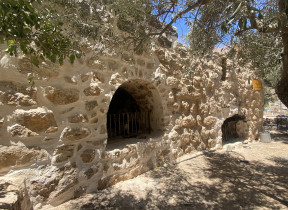
In an environment marked by restrictions and marginalization, the Association of Palestinian Local Authorities chose to turn to heritage as a tool for development—one that creates economic opportunities, reconnects communities with their legacy, and transforms historic sites into living social and productive spaces. Four projects carried out in partnership with municipalities became practical models of this approach.
Palestinian heritage is more than archeological landmarks; it is memory and identity deeply rooted in the land, and a source of resilience for communities facing political and developmental challenges. In Area “C,” which covers more than 60% of the West Bank, these sites remain constrained by occupation policies that prevent their development and deny villages and towns the ability to invest in their own resources. Yet experience has shown that reviving such places can open the door to tourism and economic growth, while strengthening national belonging and awareness of Palestinian identity.
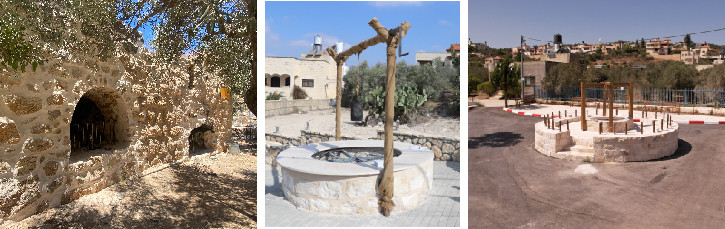
From this perspective, APLA supported LGUs in implementing projects that reactivated historical and natural landmarks in 5 localities—moving them from marginalization or neglect into productive spaces at the heart of community life.
Ein Salman in Beit Duqqu: A Fortress that Regained Its Time
At the entrance of Beit Duqqu, a village resting on the slopes near Jerusalem, grape clusters hang as if greeting visitors. The people here turned steep hills into green terraces that yield sweet fruit, making their harvests a mirror of survival and resilience. This stretch of green, and the stone walls that stood against the separation wall, are not passing details but the essence of Canaanite wisdom—an inspiration born from the land itself.
Beit Duqqu is a living field and a living archive. Its 1,500 dunums are covered with vineyards, olive trees, and almonds, all watered by fresh springs such as Ein Al-Salman and Ein Jifna. The village also holds marks of ancient civilizations: Roman tunnels in Khirbet Jifna, Wadi Al-Fuw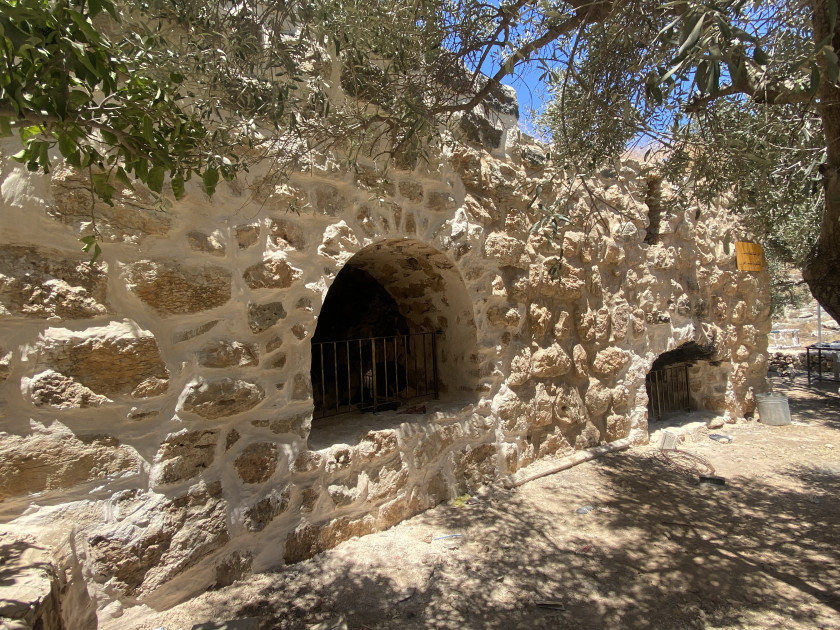 war that flows in winter, and the old “Aqd Beit Salman,” once a resting place for caravans. Every corner of the village says that history never left this land.
At the heart of this landscape lies Ein Al-Salman—a spring flowing into a stone pool, beside an old fortress with arches and towers. The place tells the story of Salman the Resolute, who chose it in the 16th century for its water and pastures. For today’s villagers, it is not ruins but a living site: children play in its courtyards, families rest in its shade, and the sound of water connects past and present.
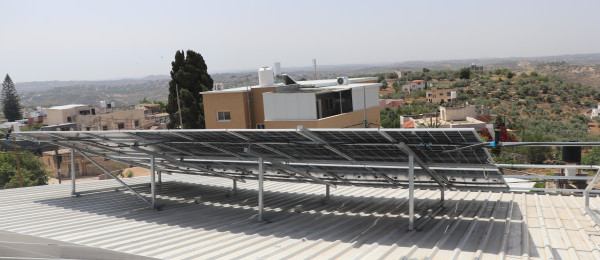
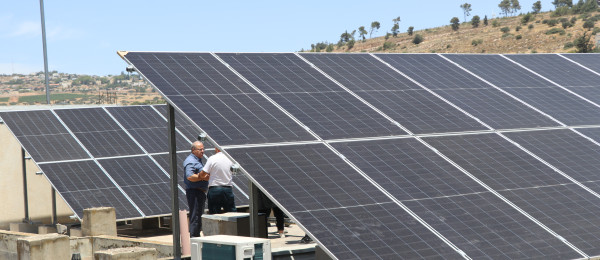
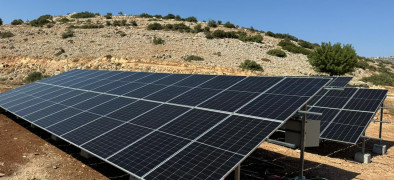
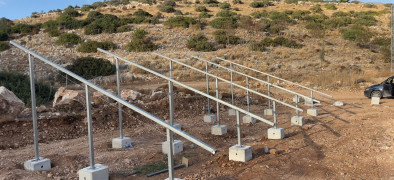
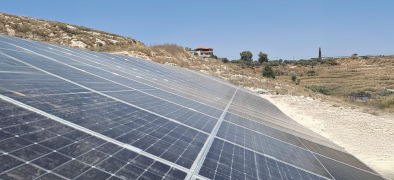
To keep this heritage alive, "Enhance the visitors flocking to Ein Salman archaeological and touristic site” Project was carried out. New walking trails were built to link the site with surrounding vineyards, making the visit part of the village itself. Solar energy allowed activities to continue into the evening, while awareness campaigns placed the site back on the map for visitors.
The impact was clear: jobs for young people, active roles for women, and days of volunteer work given by the community. Visitor numbers grew, and so did the income of the local council. But the deeper value is beyond money—Ein Al-Salman has become a space where people gather, share their history, and turn memory into daily resilience.

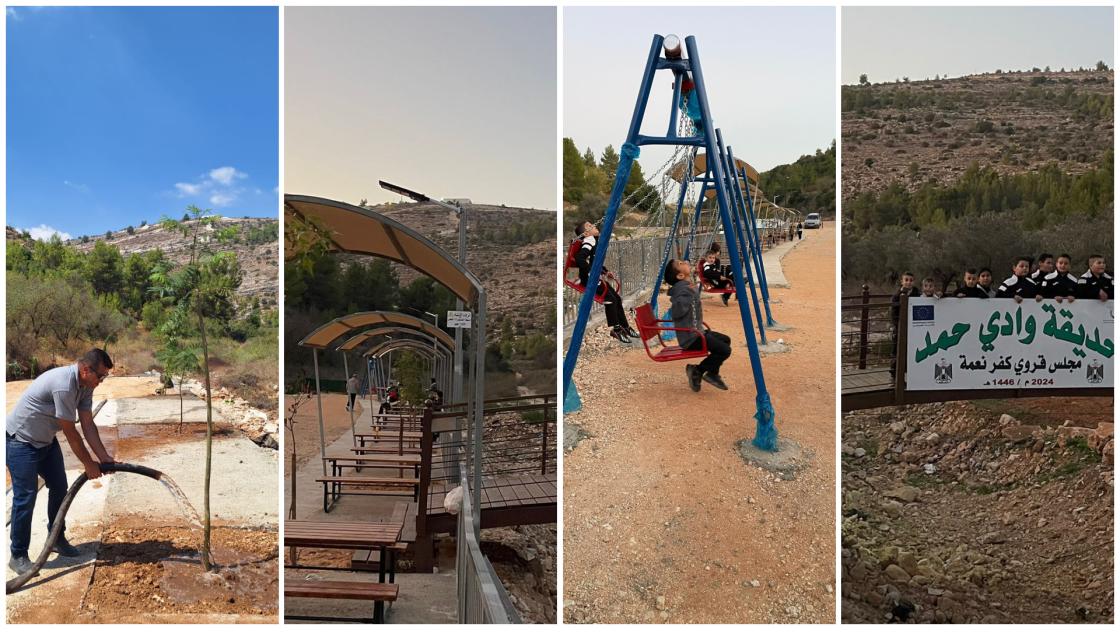
Wadi Hammad, Kafr Ni’ma: Safeguarding Land, Preserving Memory
Kafr Ni’ma, a name that has spoken of abundance for centuries. Kafr means “home” or “place,” and Ni’ma means “blessing” or “fertility.” Together, the name becomes “the home of blessings”—the home of a land that gives as much as it is cared for. The name was no coincidence, but the echo of a deep-rooted bond between people and their place, a bond built on care, endurance, and the will to remain.
To the west of Ramallah, Kafr Ni’ma stretches with modern homes that continue to grow, yet its heart remains unchanged: broad land encircled by ancient traces of past civilizations, and a collective memory inseparable from the soil. Within this landscape runs Wadi Hammad—a natural space that for decades offered the community a breath of air, where winter waters mingled with children’s footsteps, and the shade of trees welcomed farmers returning from their fields.
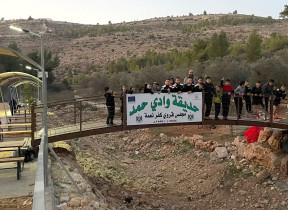
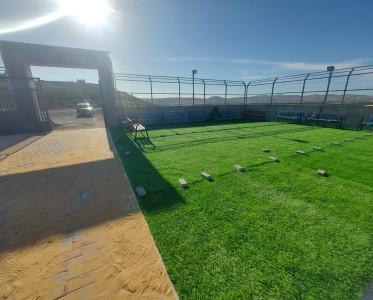
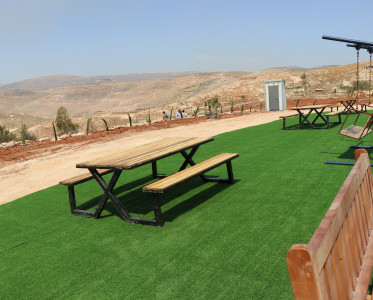
From this valley came the “Rehabilitation and Revitalization of Wadi Hammad – The Land is Ours” Project, a step that returned the wadi to its role as a living communal space. A bridge was built to link its banks, pathways were laid to ease movement, and more than 400 square meters of green public space were prepared for families and gatherings. The wadi was transformed into an open ecological park, where people meet as they once did—now in an environment designed for comfort and shared use.
The impact was swift and visible: visitor numbers rose by 20%, young people found new jobs, and the growth in eco-tourism encouraged small projects serving the site and its visitors. The village council’s budget increased by 15%, proving that nature, when preserved, can become both an economic and social resource.
The project was a true collective effort, shaped by the hands of the community. Over 120 days of volunteer work left their mark on the valley—trees were planted, trails arranged, and the space reshaped into a public common worthy of its people. From this commitment, a team of ten permanent volunteers emerged to support the council in managing and sustaining the site, ensuring it remains part of daily life.
Yet Wadi Hammad’s importance lies not only in its environmental and cultural value, but also in its vulnerability. The site faces repeated settler incursions and threats of takeover, making its protection a form of resilience. The project became more than development—it became a stand for the land, a safeguard for memory, and a clear message that the valley belongs to its people.
Today, Wadi Hammad reflects the very meaning of Kafr Ni’ma—the home of blessings: a place that gives as long as it is preserved, a renewed bond between land and community, where heritage is lived daily, deepening belonging and affirming steadfastness.
Husan: When Water Unlocks the Doors
The springs of Husan are its first keys—doors that open with water before roads. More than twenty-five springs scatter across its slopes and valleys, shaping a unique landscape where stone meets tree, and history meets the present. The murmur of water accompanies people’s steps, weaving through the fields, storing in its sound a collective memory that testifies to the village’s bond with its land across centuries.
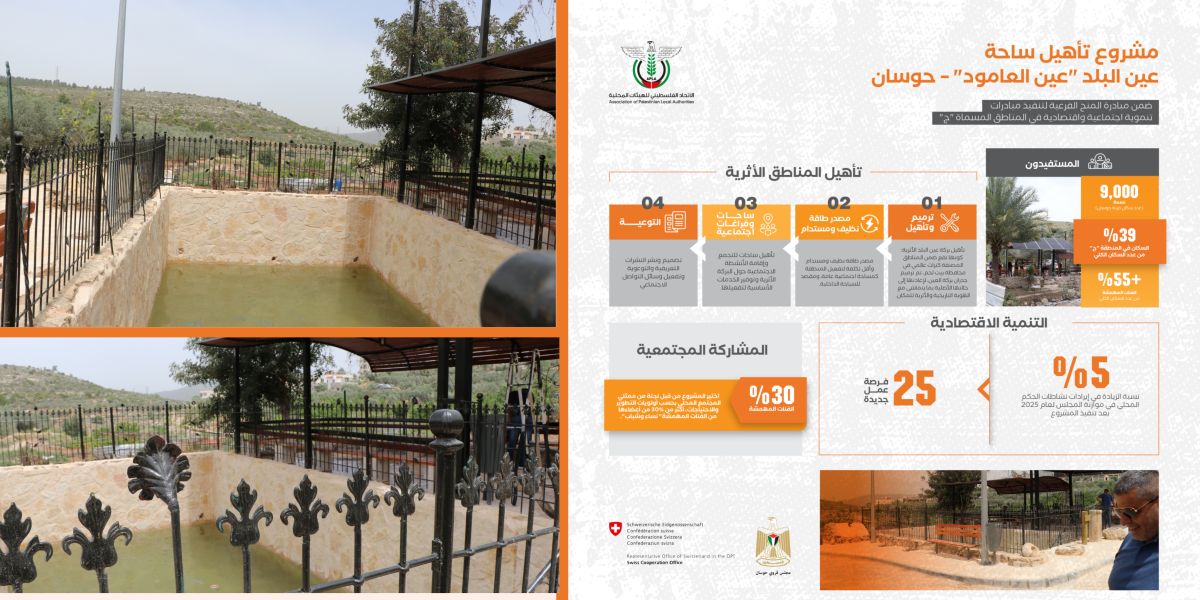
To the west of Bethlehem lies Husan, guarded by a memory of water known as Ein al-Balad. Here the seasons of cultivation once flowed, families gathered, and stories accumulated around a spring that became inseparable from the village’s very identity. The spring is a social calendar, measuring the rhythm of life—from the olive harvest to moments of rest in the fields.
Yet like the rest of Husan’s lands, the spring has never been free from attempts at seizure and intimidation. Today it lies in the crosshairs of settlement ambitions: its surroundings repeatedly targeted, its space threatened with control, while the village council is shackled by restrictions that obstruct any natural renovation or development. In this geography, water becomes a field of daily targeting: Who holds the right to access? Who decides the form and function of the place? And how does the public domain shrink into temporary permissions or open-ended prohibitions?
Amid this reality, the intervention sought to preserve the site as a safe and open community space, maintaining its nature and safeguarding its original role: a spring of life and a gathering place. The idea is simple yet decisive—organizing use in a way that ensures access, respects the surrounding environment, and secures the spring as a shared asset that cannot be taken or closed. The goal was not to create a new “facility,” but to sustain an old meaning so it remains livable: for farmers to find shade and rest, for children to feel safe near the water, and for the spring to remain a place of encounter.
The impact was quickly felt on the village’s social fabric. Daily presence around the spring began to weave small but significant connections—spontaneous meetings, brief pauses between work, and renewed conversations about land and water. These details, simple as they are, define true public space: a place that needs no exaggeration to serve its role, only to remain accessible, fair, and safe.
Here the national dimension is not rhetorical decoration; it is the core of the idea. Protecting Ein al-Balad means safeguarding a fundamental right to resources and public spaces, and rejecting the gradual encroachment that begins with water and extends far beyond it. When people preserve their natural sites and insist on using them, they assert their political presence without need for slogans: a tangible existence in place, and daily care for its most precious element.
Thus Husan, through its spring, becomes a clear lesson: to protect the water is to protect the meaning; to preserve the public space is to ensure people do not become strangers in their own village. Securing Ein al-Balad for its people is not a cosmetic act of beautification, but a quiet act of civic sovereignty over land and water—a forward line in the struggle for survival, opening the place to its rightful community and closing it against attempts to erase it..

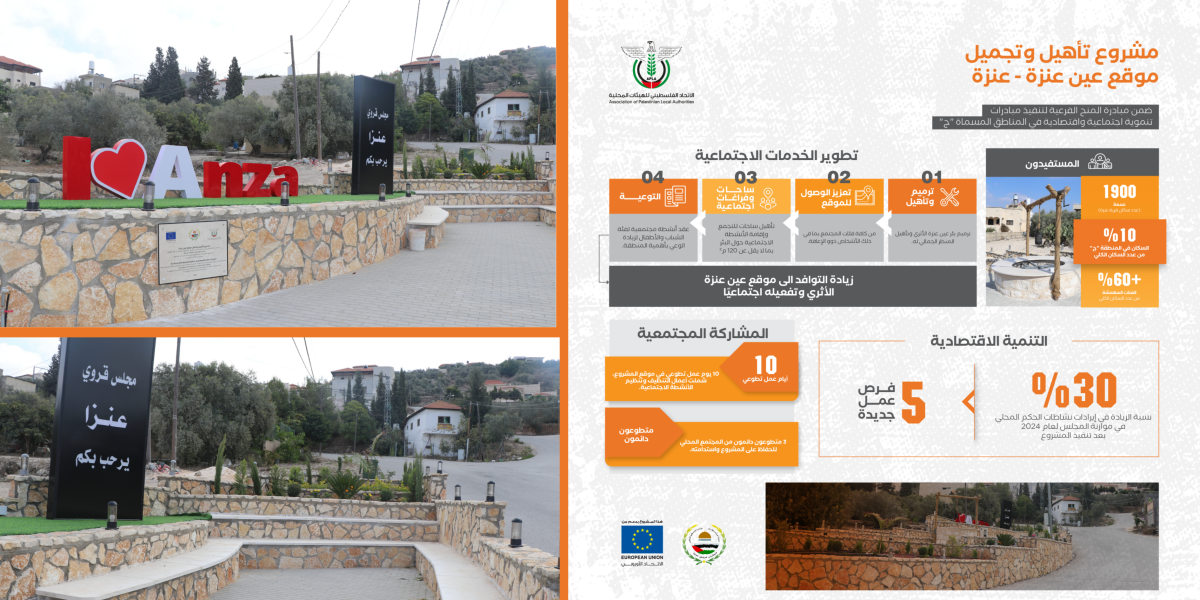
Anza | The Spring That Marks the First Step Into the Village
Perched on the shoulders of two hills south of Jenin, the village of Anza appears like a wide balcony, unfolding a layered view from mountains to valleys and all the way to the distant sea. On its terraces, steadfastness takes shape in olive trees rooted beside stone, while nearby, Wadi al-Bishm has returned to greenery as water reclaimed its course. In the fields, the damask roses planted by women leave their mark as a stubborn beauty at the heart of the landscape. From this height, the village both guards its land and opens it to the horizon.
As most of our grandparents’ stories begin around natural springs, the story of Anza begins with its spring standing at the village’s first threshold. It is as if the writer of history placed it there deliberately, to be the village’s open ledger—inscribing people’s paths upon its stones, and carrying in its water the echoes of seasons and voices. Around it, farmers’ footsteps converged, children’s sounds intertwined, and generations passed on its tales until the spring became the first line in the village’s history, and a symbol of Palestine, where every spring is a testimony of endurance.
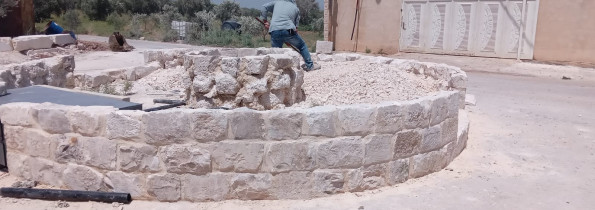
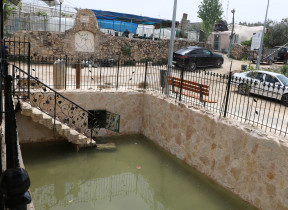
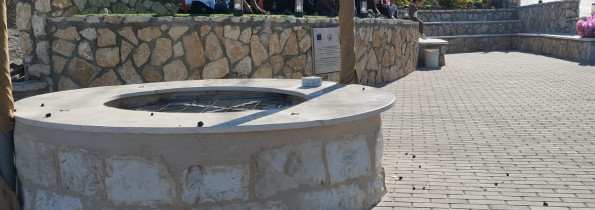
From this threshold, the scene continued with contemporary steps: the ancient well was restored, the surrounding square re-ordered, and pathways shaped to welcome all. Villagers were part of this process, engaging in voluntary work that made the project a direct extension of themselves—imprinting their daily presence upon the place just as their ancestors had left theirs.
The impact soon became clear: the spring regained its role as a daily gathering point, where visitors encounter their first image of the village and residents meet in an open space for connection and exchange. With this renewed presence came small but tangible gains: new jobs, additional revenue for the village council, and cultural and social activities that re-rooted heritage in the awareness of younger generations.
Today, Anza defines itself through both its heights and its spring: a balcony that opens to the horizon, and a threshold that preserves memory. Between the fields flowering on the hillsides and the spring that guards the entrance, the story of a living Palestinian village is written—adding a new line to a history that stretches beyond its boundaries.

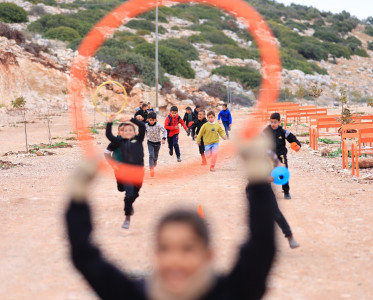
These projects are part of the Sub-Grant Program, which is implemented by the Association of Palestinian Local Authorities (APLA) in Area C. The initiatives under this program are not merely about infrastructure improvement, but serve as practical tools to keep communities rooted in their land, expand spaces of life in the face of closure and confiscation, and turn development into a daily act of resilience that safeguards rights, memory, and existence.
funded by: the European Union and the Swiss Agency for Development and Cooperation (SDC)



- 2,000 beneficiaries
- 60% of residents in Area C
- 200 m³ of spring water collected daily
- 40% reduction in water loss
- 10% increase in farmers benefiting from the spring
- 7 new jobs created
- 20% increase in the council’s 2024 budget
- 10 volunteer workdays


