2025 | In Figures


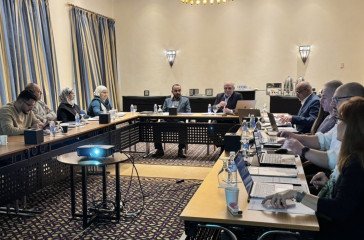
Consolidated the position of LGUs as an integral part of the national project, and as a political partner in discussions on resilience, elections, and democratic legitimacy, rather than merely service delivery bodies.
APLA's work stream in 2025
- Organised the Mayors Forum as a unified political platform for mayors, to consolidate the position of local governance at the heart of the national debate on resilience, elections, and democratic legitimacy.
- Formulated a unified political position submitted to the leadership and the government, affirming that LGUs are not merely service provision bodies, but a political partner in managing the transitional phase and beyond.
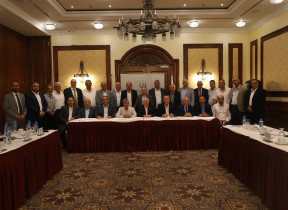
- Organised an official meeting with President Mahmoud Abbas, placing LGUs at the centre of the discussion on the continuity of services, protection of the municipal system, and role of elections in rejuvenating local democratic legitimacy.
APLA President as Co-President of UCLG-MEWA.
- Signing and activating long-term international alliances that shifted partnerships toward more institutionalized frameworks.
- Launching a comprehensive national mapping of municipal partnerships as a foundation for managing partnerships through a unified methodology.
- Establishing a national partnerships team and developing a package of standardized tools for twinning and cooperation.
- Ensuring impactful Palestinian participation in international urban forums and field exchanges linked to capacity-building efforts.
- Consolidating Palestinian leadership representation within the UCLG-MEWA and strengthening municipal diplomacy and international solidarity.
- Launching a solidarity initiative involving 11 French municipalities as part of the "Year of Palestine 2025" initiative.


Local Development and Field Projects with a Special Focus on Area "C"
- 31 completed projects within the Local Development and Field Projects track
- More than 60 LGUs benefited.
- Restoration of public space through parks, squares, and inclusive community facilities.
Sustainable environmental solutions linking environmental management with municipal service delivery and public health. - Strengthening the stability of essential services through renewable energy and the operation of critical facilities, especially water wells.
- Leveraging cultural heritage as a living development resource: rehabilitating sites, reactivating them for public use, and building knowledge for their protection.
- Planning and land management based on data, supporting pathways for a local economy and green innovation that create opportunities for youth and women, while enhancing the operational sustainability of facilities.


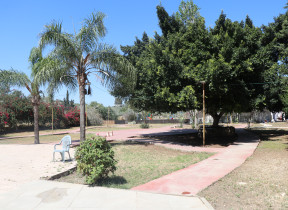
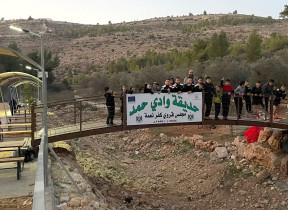

Local development and field projects were one of the most intensive and impactful tracks of the APLA operations, with 31 completed development projects implemented in villages and local communities. Mostly Area C, these were informed by an approach that viewed field projects as a tool for protecting presence, improving quality of life, and enhancing the capacity of LGUs to respond to the needs of their communities in a highly constrained environment.
These interventions were implemented as part of an integrated vision led by LGUs themselves. Combining service, environmental, economic, and social dimensions. they are tailored to strengthen everyday resilience and consolidate the role of local governance as a key development and community actor.

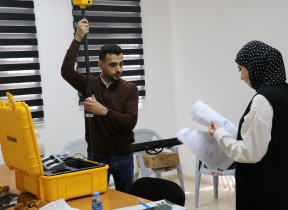
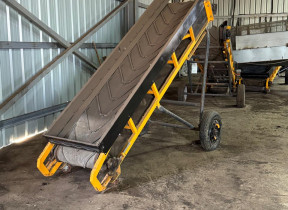
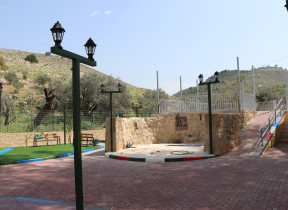
Alongside the development of public space projects and environmental, energy, and water initiatives, APLA has further advanced this approach through additional tracks that broaden the concept of local development to include resource protection and the enhancement of livelihood opportunities. Cultural heritage has been integrated as part of local development, through interventions that preserve sites and reactivate them as community and economic assets, linking local identity with practical and sustainable solutions.
APLA has also supported the land management and data-driven planning track as a regulatory entry point to protect resources and accurately define priorities in an increasingly constrained and complex environment marked by growing violations. This has been complemented by small-scale projects that open income opportunities and revitalize the local economy, as well as green economy and innovation interventions that offer solutions to reduce costs, improve efficiency, and promote more realistic sustainability.
Through this approach, the different tracks have been layered to generate deeper impact led by local governance, translating resilience into services, opportunities, and decisions that are better able to protect presence and strengthen sustainability on the ground.
Municipal Technical Exchange and Capacity Building Hubs



Taskforces: From “Training Recipients” to “Producers of Tools”
- Regulation on Fees for Tangible Cultural Heritage.
- Draft Law by Decree on Industrial Cities and Free Industrial Estates.
- Draft Law by Decree on the Environment of 2025.
- Regulation on Wholesale Vegetable and Fruit Markets.
- Building, Planning, and Property Valuation Regulations.
- National Strategy for Solid Waste and Resource Management 2025-2030.
- Instructions and regulations on the management of hazardous materials and waste, soil specifications, and the 2026 budget preparation circular.
- Draft Law by Decree on the Election of Local Government Unit Councils.
- Law on Local Government Unit Courts.
- Draft Law by Decree on Public-Private Partnership.
- Intergovernmental Transfers System with the World Bank.
- Net Lending File with the World Bank.
- A policy paper submitted to the Ministry of Finance regarding the Law on Professional Licences and Law on Buildings and Land Tax.
- Draft Internal Audit Procedures Manual for Local Government Units.
- Complaints System in Village Councils.
A direct professional channel was established between the staff of Nablus Municipality and Beit Jala Municipality to share knowledge on the use of GIS.
Both municipalities presented their experience in ensuring access to basic services during military incursions and in addressing forced displacement in northern West Bank camps, making the discussion on “service continuity” grounded in field realities rather than assumptions.
The municipality’s experience in employing GIS within the city’s traffic plan was used as a model for linking spatial data to traffic regulation and improving urban planning.
The experience of using GIS to improve the collection of buildings and land tax (property tax) provided a model for how technology can enhance revenue efficiency without recourse to punitive measures.


“Engaging in municipal work was not an easy decision; rather, it was a courageous choice in a reality where politics intersects with public service. From our position close to the people, we can redefine local decision-making to be more equitable and more closely connected to citizens’ lives".
“I come from a conservative rural environment that did not view women’s leadership as customary. Leadership is not granted; it is earned through work and perseverance. The presence of women in local governance is essential to restoring balance within the structure of decision-making".
“In the Palestinian context, local leadership is an act of survival and a collective responsibility, not an administrative luxury. When a woman leads a municipality, policies become closer to the people and more sincere in expressing them".













SDG Localisation – From Institutionalisation to Implementation
- Institutionalising SDG Localisation within APLA.
- Building the Leadership and Governance Framework for SDG Localisation.
- Translating SDGs into Planning, Financing, and Measurement.
- Expanding Local Impact in the Environment, Education, and Community.